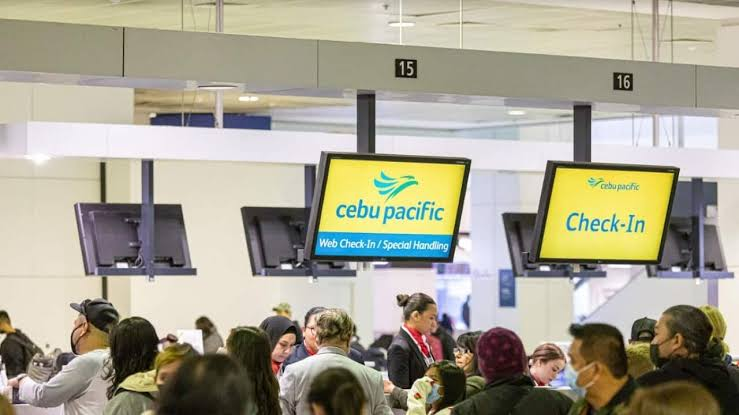
Cebu Pacific, the controversial airline owned by billionaire tycoon Lance Gokongwei, seems to have found a rather unique business strategy – making a fortune from their passengers’ suffering.
Financial records from the airline reveal a jaw-dropping surge in revenues generated from rebookings, refunds, and cancellation fees, amounting to a staggering P2 billion in the first quarter of this year alone. That’s a mind-boggling 270 percent increase compared to pre-pandemic times!
What’s more astonishing is that these additional charges accounted for approximately 10 percent of Cebu Pacific’s total revenue during that period.
It’s like they’ve unlocked a secret treasure chest hidden within their customers’ distress. But how did they manage to achieve such a remarkable feat?
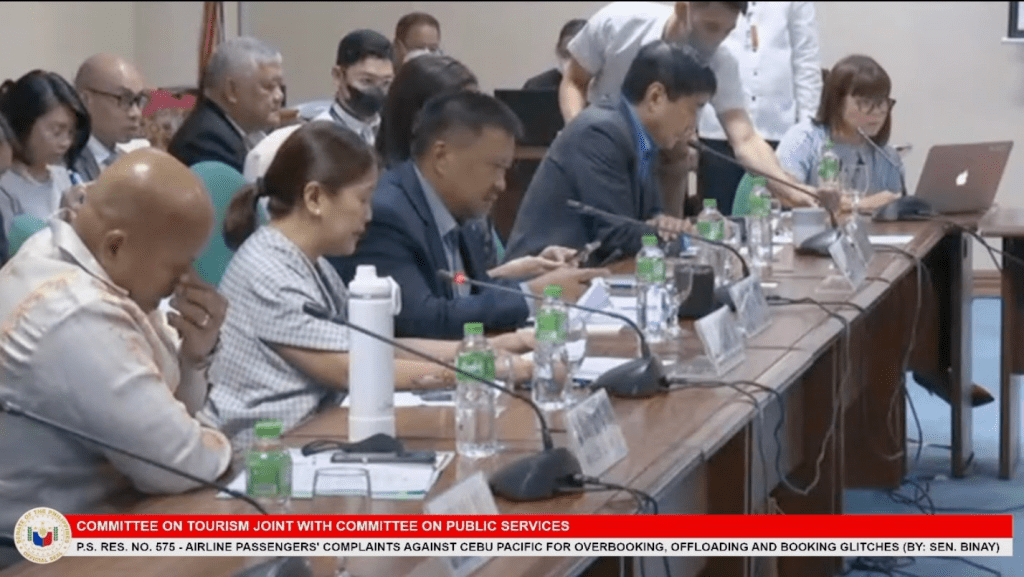
One theory put forth by Congressman Rufus Rodriguez is that Cebu Pacific has been selling an excessive number of tickets without having enough planes to accommodate all the eager travelers.
It’s as if they’ve invited everyone to a party and forgot to arrange enough chairs. No wonder there have been so many horror stories circulating about overbooked flights and frustrated passengers!
Of course, Cebu Pacific has its excuses. They point fingers at a global parts scarcity, claiming that it has led to a reduction in their fleet capacity and subsequently, a surge in flight cancellations.
But here’s the twist: the airline was well aware of the spare parts shortage as early as March this year! It wasn’t until they were summoned to a Senate probe and faced with the wrath of disgruntled passengers that they finally decided to take action.
But promises alone won’t solve the problem. Cebu Pacific has been assuring everyone that they’ll fix things by the end of next month.
However, it’s worth noting that passengers have been grappling with these issues since the beginning of the year. It seems like Cebu Pacific has been playing a never-ending game of catch-up while their customers bear the brunt of their missteps.
Thankfully, some government officials are stepping in to defend the rights of passengers.
DOJ Undersecretary Geronimo Sy voiced his opinion at the Senate Committee on Tourism, stating that when Cebu Pacific cancels or delays flights due to their own errors, passengers should not be burdened with additional fees for rebooking. It’s a common-sense approach that places responsibility where it belongs – on the airline.
Sy argues that the cost of rebooking shouldn’t be shouldered by the passengers. In fact, he challenges anyone to find an instance where rebooking resulted in a cost reduction. The reality is that fares tend to increase, leaving passengers at a financial disadvantage.
Furthermore, he believes that the vouchers provided to affected passengers should have no expiry date or limitations on usage. After all, cash doesn’t expire, so why should vouchers? It’s a simple principle of fairness that Cebu Pacific should adopt.
Senate Committee Chairman Nancy Binay echoes these sentiments, urging the airline to offer travel funds without expiration dates. It’s only fair that passengers who were unable to fly and choose to opt for travel funds are not restricted by time constraints when planning their future trips.
As financial records show, Cebu Pacific’s revenue from rebookings, refunds, and cancellation fees has quadrupled to a staggering P2 billion in the first quarter of this year. This astronomical figure emphasizes the magnitude of their profits derived from the misfortune of their passengers.
It’s high time for Cebu Pacific to take responsibility, rectify their mistakes, and prioritize the well-being of their customers. The airline industry should be about making travel accessible and enjoyable, not exploiting passengers’ misery for financial gain. As consumers, let’s demand fairness
 The Daily Netizen