
In the realm of social media, where stories have the power to captivate millions, there are tales that emerge from the shadows, exposing the underbelly of corruption, power-tripping, and incompetence. Such was the case when Ace, known as Aldrin Clark Edward Bicomong on Facebook, shared his “Love the Philippines” horror story, unraveling a web of deceit and collusion between the Bureau of Immigration (BOI) and airlines that left him reeling.
Ace’s Facebook post, titled “Worst Experience Ever,” took the internet by storm, gathering a staggering 88,000 reactions, 14,000 comments, and 31,000 shares within hours. As his narrative unfolded, it became evident that his story was a damning reflection of the scandal that recently engulfed Cebu Pacific, revealing how the airline profited from the misery of its passengers through exorbitant rebooking, refund, and cancellation fees.
With Ace’s account, a chilling truth began to surface—a distressing tale that shed light on the collaboration between the BOI and airlines, both preying on unsuspecting travelers. In a nation where hospitality and warmth are renowned, Ace’s journey through the Philippine immigration system offered a stark contrast, exposing the dark side of the travel experience.
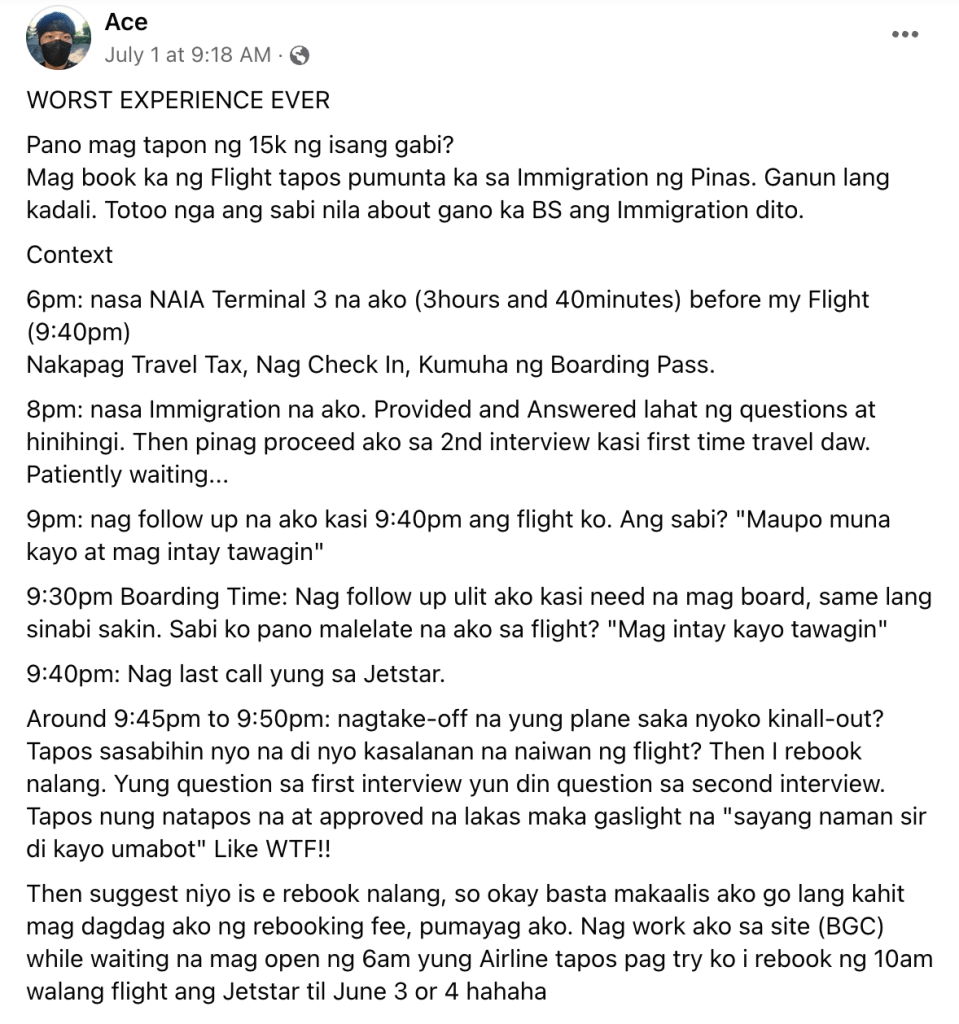
The narrative begins at NAIA Terminal 3, where Ace found himself three hours and forty minutes before his 9:40 PM flight. Completing all necessary procedures, including paying travel tax, checking in, and obtaining his boarding pass, he proceeded to the Immigration counter at 8 PM, prepared to embark on his journey. With sincerity and patience, he responded to every question asked, but unexpectedly, he was directed to a second interview due to being a first-time traveler.
In the words of Ace himself, “Nakapag Travel Tax, Nag Check In, Kumuha ng Boarding Pass.” He had fulfilled all the requirements, but little did he know that his nightmare was just beginning.
As the clock ticked away, the minutes passing swiftly, Ace waited with bated breath, the anticipation of catching his flight growing ever more palpable. Seeking assurance and updates, he approached the Immigration officials at 9 PM, only to be met with a curt instruction to wait a little longer. The words echoed in his mind as he nervously watched the boarding time inch closer—9:30 PM.
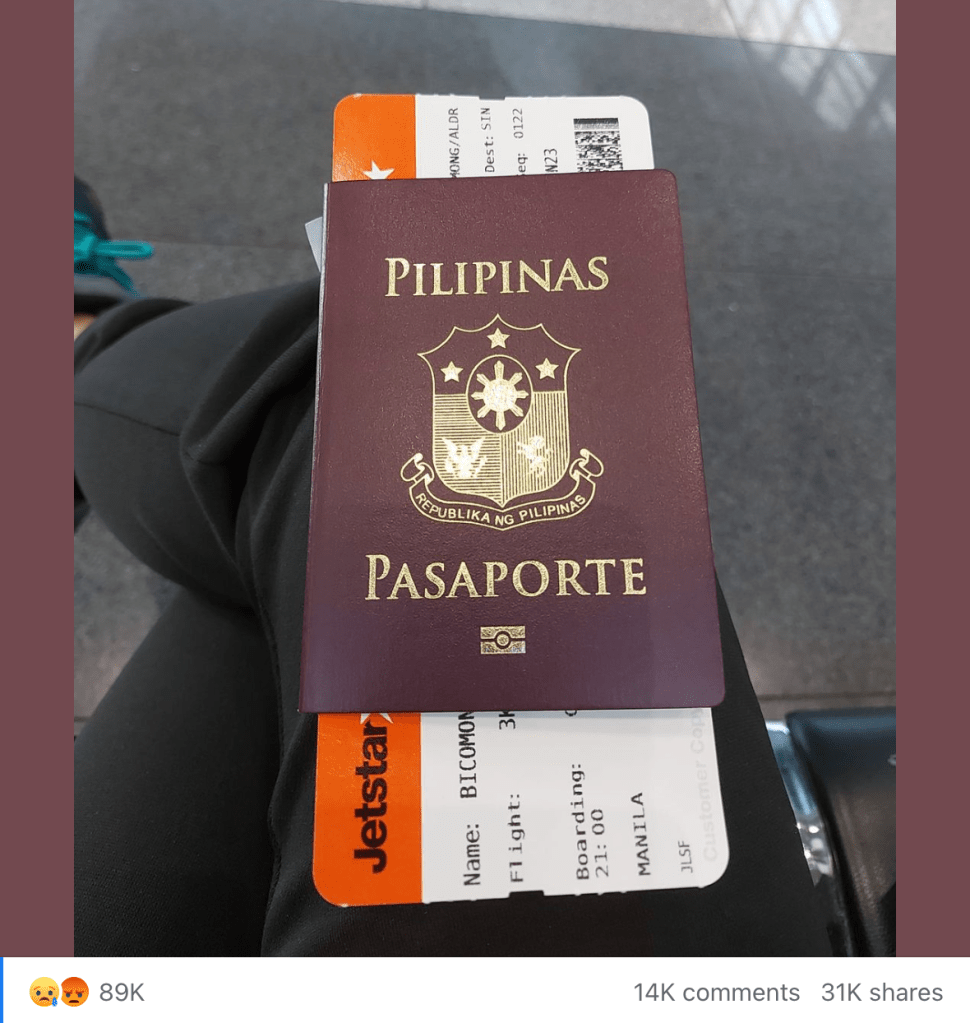
Frustration mounting, Ace inquired again, desperately explaining that he needed to board the plane. But the response remained unchanged—wait to be called. The minutes slipped away, and at precisely 9:40 PM, the final boarding call resounded throughout the airport. The Jetstar flight began its ascent into the night sky, while Ace was left stranded, feeling abandoned and betrayed.
Recalling the distressing moment, Ace shared, “Around 9:45pm to 9:50pm: nagtake-off na yung plane saka nyoko kinall-out? Tapos sasabihin nyo na di nyo kasalanan na naiwan ng flight?” The anguish in his voice was palpable, as the realization of the authorities’ indifference hit him hard.
In the aftermath of the ordeal, Ace sought redress, demanding answers and accountability. Yet, instead of acknowledging their negligence, the officials dismissed his distress, shifting the blame onto him. The disheartening gaslighting left him reeling, wondering how a system entrusted with ensuring the smooth passage of travelers could so callously disregard their responsibilities.
With frustration and disbelief, Ace conveyed his experience, saying, “Ang Ending? 15k LANG YUNG LUMIPAD HINDI AKO HAHAHAHAHAHA! Grabe yung puyat pagiintay, pagod at gutom tas ending uuwi din pala ako ng Laguna na parang naholdup ng 15k. Akala ata nila nasisimot lang yung ganung pera.”
Desperate to salvage his plans, Ace agreed to rebook his flight, willing to bear the burden of additional fees. While waiting for the airline to open their services at 6 AM, he toiled away at a nearby site in Bonifacio Global City (BGC), hoping to secure a new flight for 10 AM. However, his hopes were swiftly crushed as he discovered that Jetstar had no available flights until June 3 or 4—an insurmountable delay.
And so, the culmination of a journey marred by incompetence and greed was revealed. Ace’s ticket was labeled “No Show,” despite having completed the check-in process, rendering it null and void, with no hope of a refund. The price he paid for this harrowing experience amounted to a staggering 15,000 pesos, an amount that seemed to mockingly flutter away, leaving him feeling as though he had been robbed in broad daylight. The emotional toll was immeasurable.
Grasping the true impact of the situation, Ace concluded, “Grabe yung Trauma sakin. Ayoko na umalis ng Pinas.” The traumatic experience had left an indelible mark, eroding his trust and instilling a fear of venturing beyond the Philippines.
Ace’s tale serves as a cautionary reminder of the hidden perils lurking beneath the surface of the travel industry, ready to ensnare unsuspecting individuals. It shines a light on the urgent need for reforms within the Bureau of Immigration and the airline industry, urging them to prioritize the well-being and satisfaction of travelers.
Quoting the words of Edmund Burke, “The only thing necessary for the triumph of evil is for good men to do nothing.” So let us raise our voices, share our stories, and demand change, ensuring that our beloved Philippines becomes a beacon of integrity, fairness, and excellence in the realm of travel. Only then can we truly say, “Love the Philippines.”
 The Daily Netizen