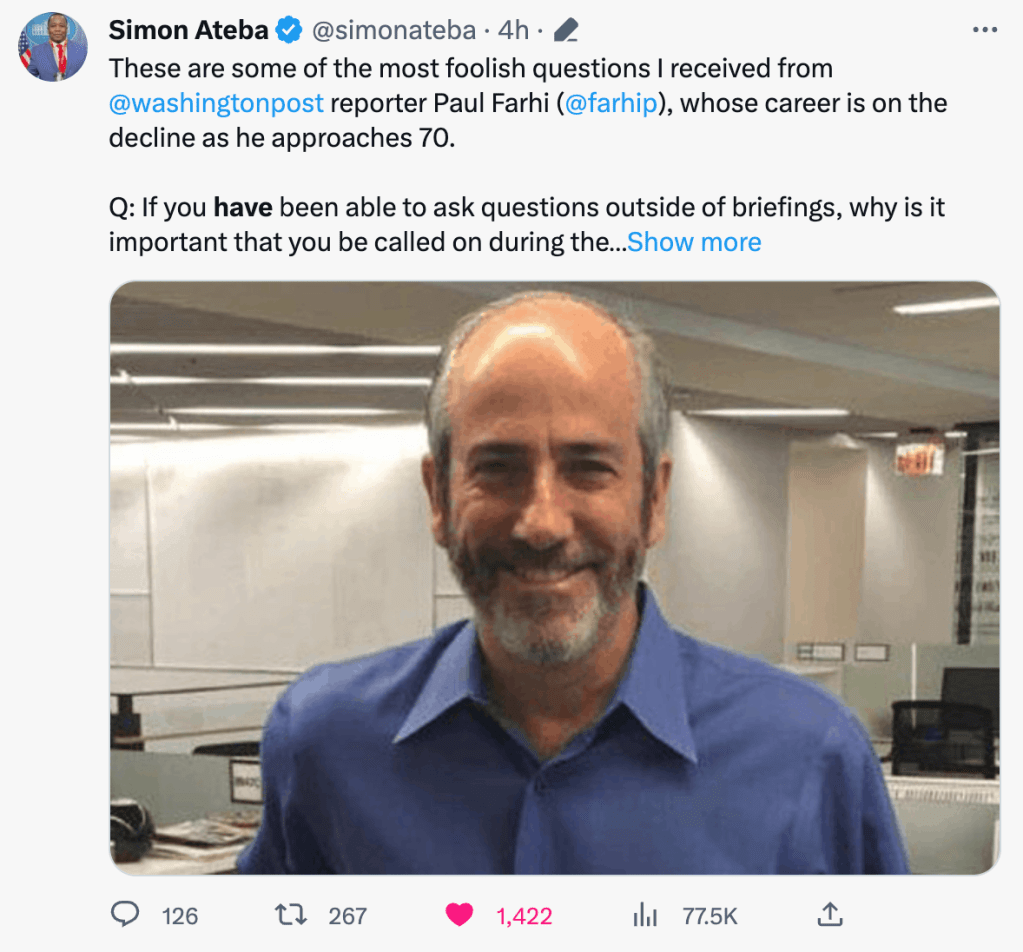
In a recent controversy, Simon Ateba, an African immigrant and respected White House correspondent, has called out The Washington Post for alleged racism and a political hit job. The publication targeted Ateba, prompting him to expose their biased approach and fight back against their unjust claims.
Ateba, known for his diligent reporting and insightful questions during press briefings, took to Twitter to address the situation, stating, “The reason @washingtonpost was ordered to do a hit piece on me is because on July 31, all White House hard passes would expire, and the @whitehouse would need a reason not to renew mine.” He emphasized the potential motive behind The Washington Post’s attack, suggesting that it was an attempt to hinder the renewal of his press pass.
The African journalist also voiced his frustration with the Biden White House’s lack of transparency and the evasive responses from spokesperson Karine Jean-Pierre. Ateba expressed concern that critical questions about corruption were being sidestepped, while he faced censorship and barriers in performing his journalistic duties. He highlighted the importance of accurate information to strengthen US-Africa ties amid growing influence from China and Russia.
The controversy escalated when The Washington Post’s Paul Farhi published a hit piece on Ateba, portraying him as “the White House reporter who makes himself the story in the briefing room.” Farhi’s article received significant backlash, amassing a greater number of comments (635) than likes (169), reflecting the discontent among readers.
Ateba did not stay silent. Instead, he exposed Farhi and the Washington Post’s alleged racism by sharing the “foolish” questions Farhi had asked him. By shedding light on these questions, Ateba aimed to reveal the dishonesty, bias, and racism within the publication’s coverage.
Ateba’s influence and platform have been instrumental in challenging the status quo. He emphasized, “When you fail to do so, you may pose the type of offensive and foolish question that the Washington Post reporter sent me, asking if I was merely seeking television exposure in my work.”
His substantial following on Twitter and wide reach demonstrate the impact he has made in advocating for the betterment of humanity.

While Ateba faces adversity, he remains steadfast in his mission. He shared, “I could teach him a thing or two, but his ego holds him captive, preventing him from advancing beyond his current position.” Ateba’s determination to provide fair and insightful reporting continues to resonate with his audience.
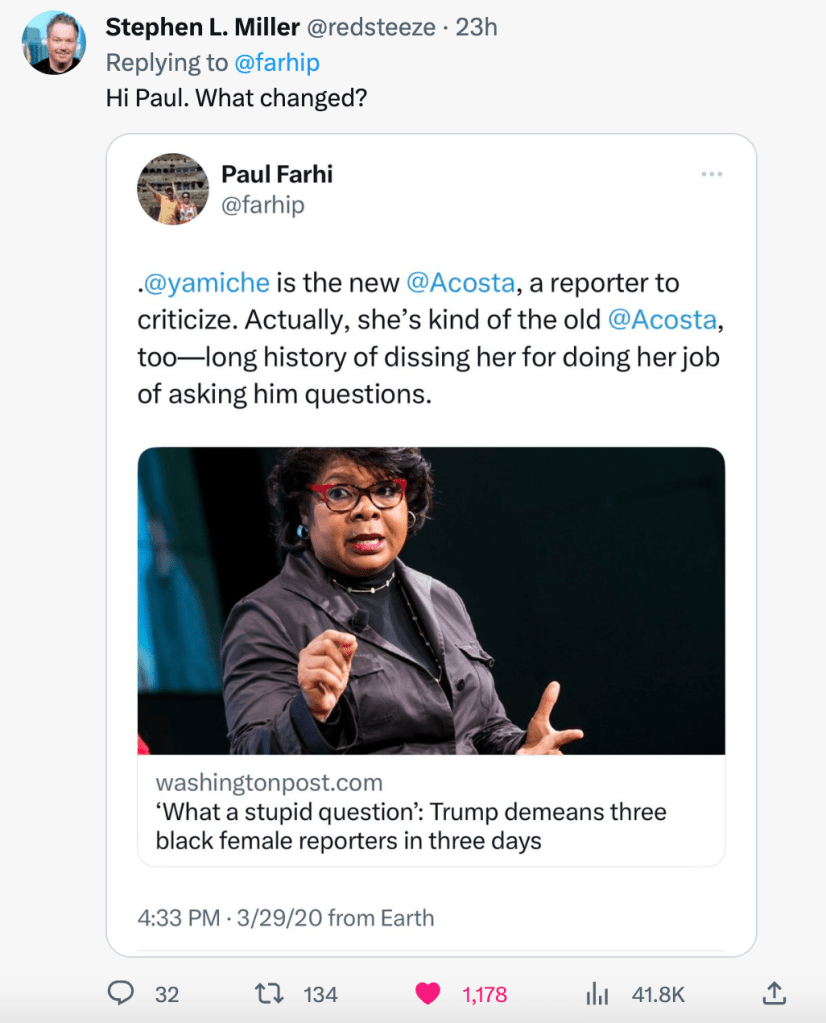
The incident with The Washington Post serves as a reminder of the challenges faced by journalists, particularly those who question authority.
Ateba’s bravery in exposing the publication’s alleged bias and racism amplifies the importance of independent journalism and the pursuit of truth.

As Ateba faces unwarranted attacks on his character, he remains hopeful that other publications will shed light on the bigger story at hand. His unwavering commitment to honest reporting and his influence as a prominent African journalist will undoubtedly leave a lasting impact on the field of journalism.
In the words of Ateba, “May God have mercy on them,” as he continues to navigate the complex world of journalism and strive for the truth.
 The Daily Netizen