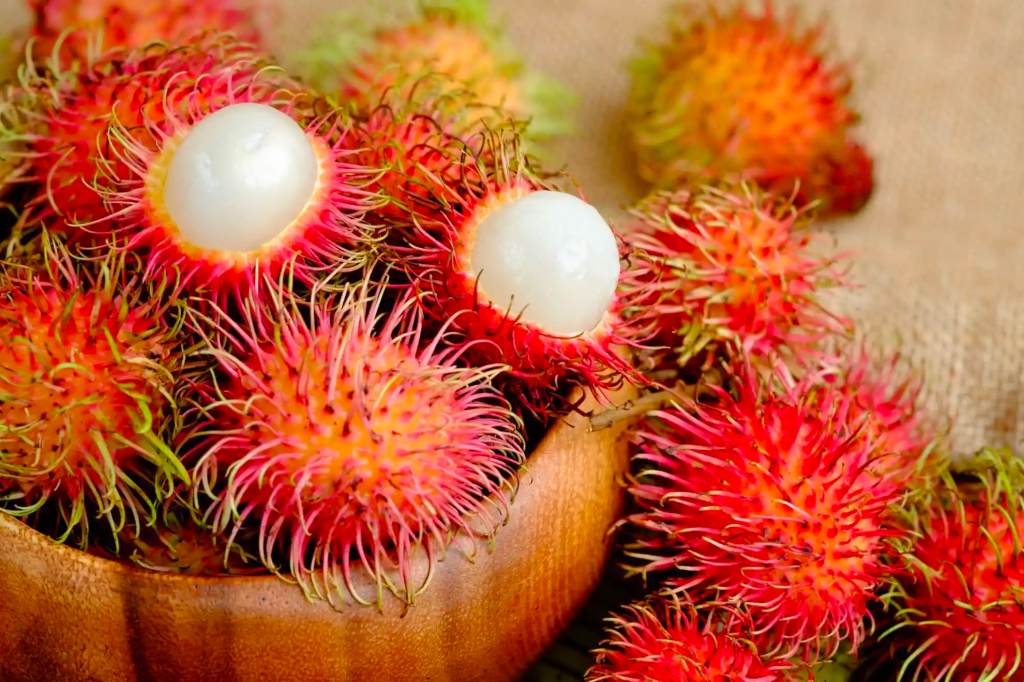
Rambutan, the luscious tropical fruit with a peculiar appearance, has long captured the taste buds of those fortunate enough to taste its juicy sweetness.
Historically known to thrive primarily in Southern Luzon, specifically in the provinces of Laguna, Cavite, Batangas, and Quezon, this seasonal fruit-bearing tree has found new territories to flourish in the northern part of the Philippines, particularly in Ilocos Sur. The journey of rambutan from being a regional delight to gaining national prominence is a testament to its versatility and appeal.
A Brief History of Rambutan
Originating in Southeast Asia, rambutan (Nephelium lappaceum) belongs to the Sapindaceae family, which includes other well-known tropical fruits like lychee and longan. The name “rambutan” comes from the Malay word “rambut,” meaning “hair,” which aptly describes the fruit’s distinctive appearance – a round, red or yellowish-skinned fruit covered with soft, spiky hairs.
Rambutan’s journey began centuries ago, with its cultivation dating back to ancient times in the region. It gradually spread to other tropical regions, becoming a beloved delicacy wherever it found a hospitable climate. The fruit’s sweet and succulent taste, coupled with its striking appearance, made it a popular treat among locals and foreigners alike.
Cultivation and Growth
Traditionally, rambutan thrived in the provinces of Southern Luzon, where warm and humid climates were conducive to its growth. However, the fruit’s reach has expanded, finding its way to Ilocos Sur in the northern part of the Philippines. This expansion signifies the adaptability of rambutan and its ability to flourish in a broader range of climates.
Rambutan trees are medium to large-sized evergreen trees that grow up to 12-20 meters in height. The tree’s canopy provides dense shade, which helps protect the delicate rambutan fruit from excessive sunlight. Rambutan trees require well-draining soil and regular watering to flourish.
Harvesting Rambutan
Rambutan trees typically bear fruit once a year, and the harvesting season usually falls between June and August. When the fruit is ready for harvest, the spiky hairs on the skin turn from green to vibrant red or yellow, depending on the variety. This visual cue signals the ripeness of the fruit.
Harvesting rambutan is a delicate process to avoid damaging the fruits. The ripe fruits are carefully plucked from the tree, ensuring they are handled with care to prevent any bruises or blemishes.
Health Benefits of Rambutan
Beyond its delectable taste, rambutan offers a host of health benefits due to its rich nutrient profile. Some of the key health benefits of rambutan include:
- Immune System Support: Rambutan is a rich source of vitamin C, a potent antioxidant that boosts the immune system and helps protect the body against infections and illnesses.
- Digestive Health: The fruit’s dietary fiber aids in digestion, promoting regular bowel movements and improving gut health.
- Heart Health: Potassium in rambutan helps regulate blood pressure, supporting cardiovascular health.
- Antioxidant Properties: Rambutan contains various antioxidants, such as flavonoids and polyphenols, which combat free radicals and reduce the risk of chronic diseases.
- Energy Boost: Natural sugars in rambutan provide a quick energy boost, making it an ideal snack for those needing a pick-me-up.
Potential Health Benefits and Cures:
While rambutan offers numerous health benefits, scientific studies are ongoing to explore its potential role in addressing specific health conditions.
Some studies have suggested that rambutan extracts may possess antimicrobial properties, which could be beneficial in combating certain bacterial and fungal infections. However, further research is needed to establish these potential health benefits conclusively.
More to know
Rambutan, once confined to the southern regions of the Philippines, has now found fertile ground in the northern province of Ilocos Sur, showcasing its adaptability and appeal to a wider audience. From its historical roots to its modern-day cultivation, rambutan’s journey is a testament to its enduring charm and delicious flavor.
As a nutritious and delightful tropical treasure, rambutan provides a myriad of health benefits, promoting a stronger immune system, digestive health, heart health, and overall well-being. While it is a seasonal treat, rambutan’s versatility in cultivation and potential health benefits make it a promising addition to the diverse array of tropical fruits grown in the Philippines.
So, the next time you savor the juicy sweetness of a rambutan, remember its journey from regional delight to nationwide recognition—a testament to the captivating allure of this tantalizing tropical fruit.
 The Daily Netizen