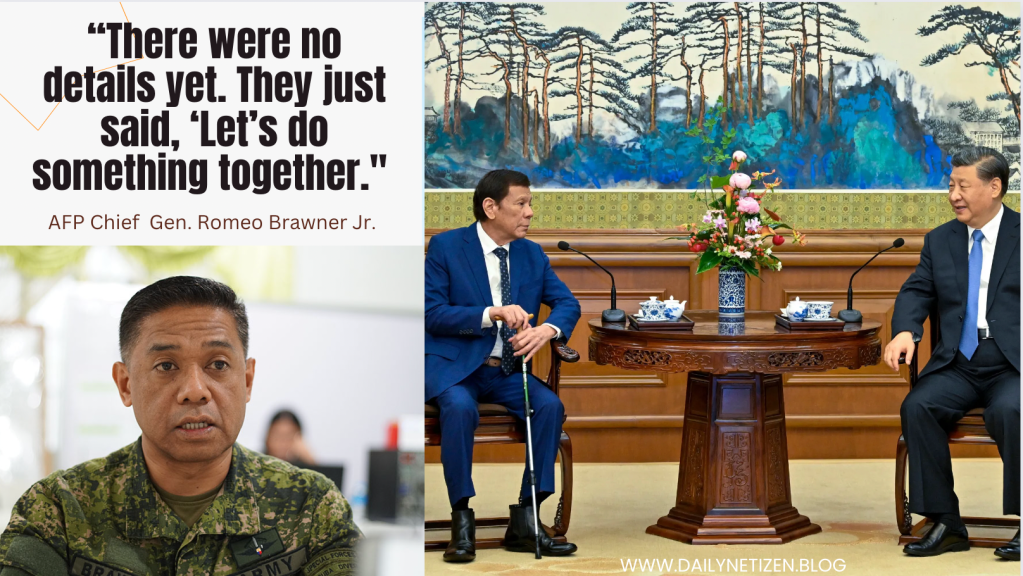
Immediately following former Philippine President Rodrigo Duterte’s visit to Beijing and his meeting with China’s President Xi Jinping to strengthen bilateral cooperation, an unexpected proposal arose. Beijing floated the idea of a joint military drill with the Philippines, a nation with which China has a history of maritime disputes. While Duterte’s visit was intended to foster friendly relations, the proposal adds a new dimension to the discussions and raises questions about the implications of such cooperation.
Philippine media swiftly reported on the Chinese offer, attributing it to China’s envoy to Manila, who presented the proposal to the Philippines Armed Forces Chief, Romeo Brawner. While Brawner acknowledged the Chinese submission of “white papers,” he also highlighted that the proposal was part of “informal talks” with the Chinese envoy. This development comes as tensions simmer in the South China Sea, with the Philippines increasingly accusing Chinese forces of aggression in the disputed waters.
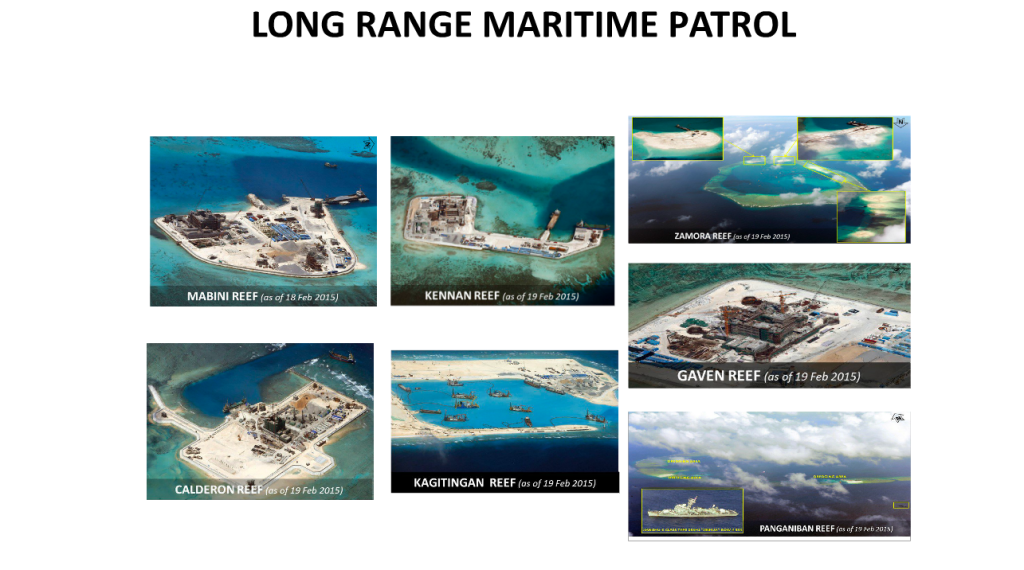
The idea of a joint military exercise raised eyebrows, given the region’s complex geopolitical dynamics. Brawner clarified that exploring relations with armed forces worldwide was one way to prevent conflict, emphasizing the importance of diplomacy over war.
However, Philippine military spokesperson Medel Aguilar later revealed that he had no knowledge of the “white papers,” casting some uncertainty over the details of China’s offer. The suggestion of a joint drill arrives at a time when China disregards the 2016 Arbitral Tribunal ruling, which invalidated its claims in the South China Sea, including disputes with the Philippines.
Notably, Brawner made it clear that any such military exercise would not occur in the West Philippine Sea, asserting the Philippines’ sovereignty in the contested region. In a show of strength, the Philippine coast guard deployed navigational buoys within its exclusive economic zone in the South China Sea, a move that garnered China’s disapproval.
The Philippines’ pursuit of strengthened ties with the United States comes amid escalating Chinese aggression. In May, the Philippines and the US issued a joint statement urging China to exercise restraint in the Taiwan Strait, signaling a strategic alliance between the two nations.
As China’s “informal” proposal to conduct a joint military drill lingers in the air, questions arise about its potential ties to Duterte’s recent visit to Beijing, where cooperation and diplomacy were on the agenda. The situation adds complexity to the already tense relationship between China and the Philippines, and underscores the importance of careful navigation in the contested South China Sea.
 The Daily Netizen