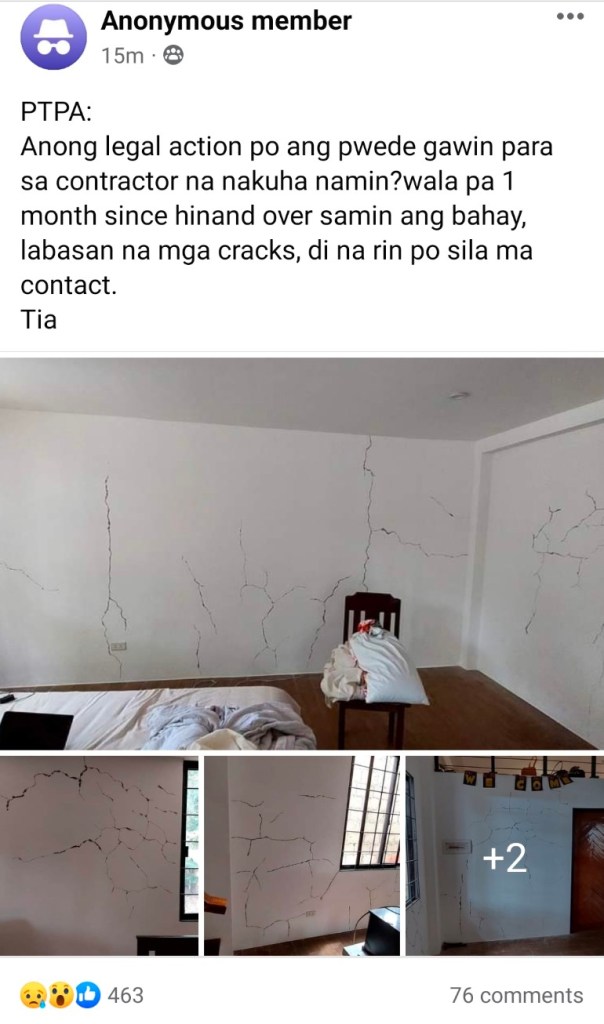
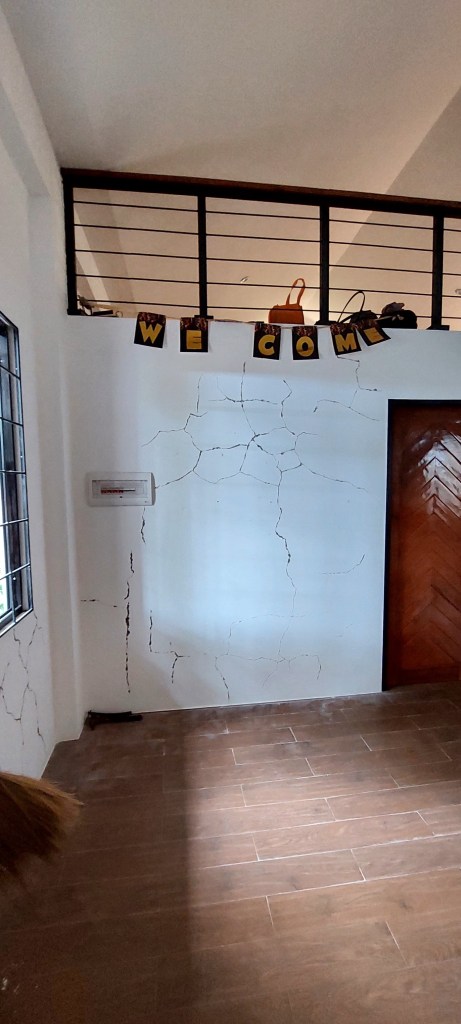
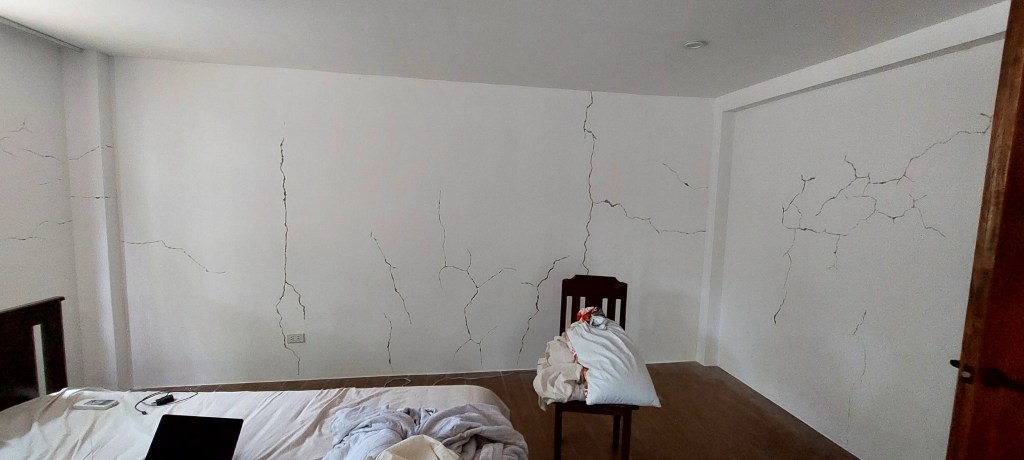
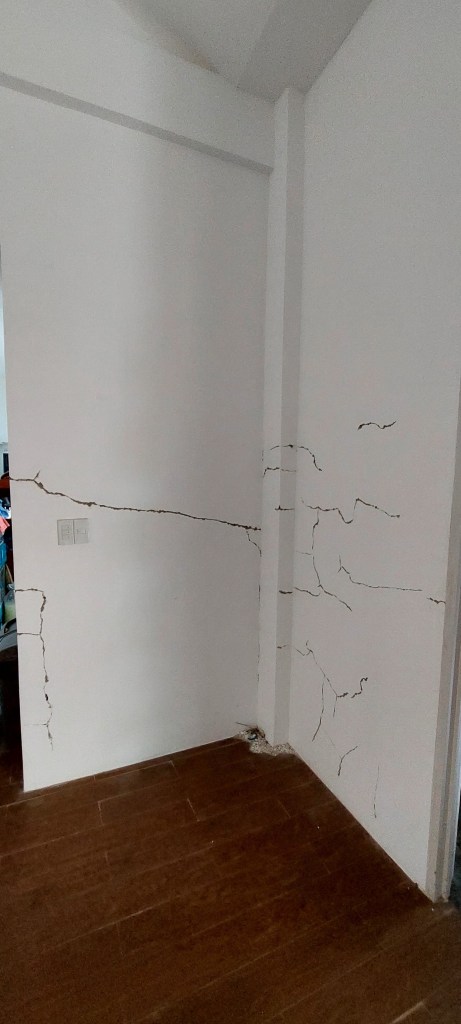
Owning a home is a significant milestone for many individuals and families. However, the dream can quickly turn into a nightmare if the newly constructed house begins to exhibit alarming and substantial cracks on walls and foundation within a month of turnover.
In such unfortunate situations, homeowners may wonder what legal actions they can take against the contractor responsible for the substandard construction.
This article aims to shed light on the potential legal avenues available to homeowners in the Philippines who find themselves facing this predicament.
Question from “Home Buddies” Facebook Member:
“Anong legal action po ang pwede gawin para sa contractor na nakuha namin? Wala pa 1 month since hinand over samin ang bahay, labasan na mga cracks, di na rin po sila ma-contact.”

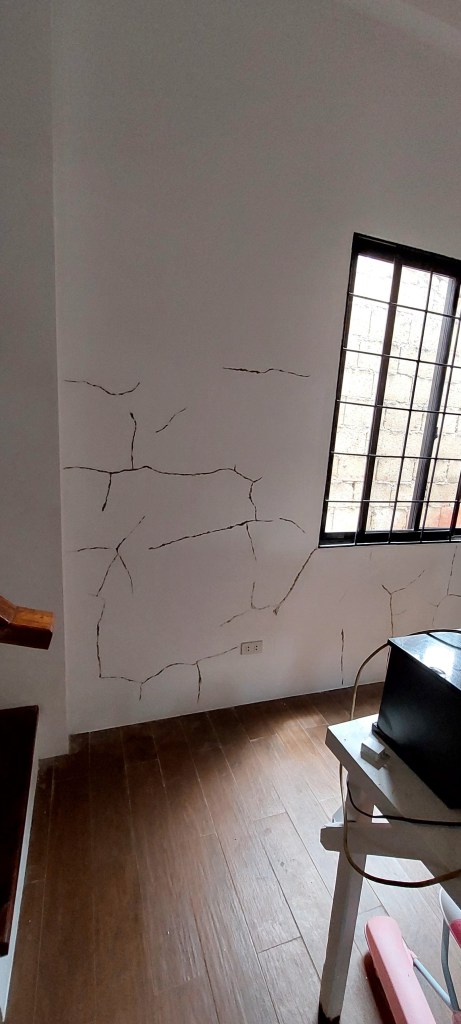
Exploring Possible Legal Actions:
- Republic Act No. 4566 (The Contractor’s License Law): The first step in assessing the contractor’s accountability is to verify their licensing and registration status. Republic Act No. 4566 regulates the licensing and registration of contractors in the Philippines. If the contractor is not properly licensed or registered, this could serve as a basis for legal action. Homeowners can check the contractor’s details with the Philippine Contractors Accreditation Board (PCAB) to determine their legitimacy.
- Republic Act No. 7394 (The Consumer Act of the Philippines): The Consumer Act of the Philippines safeguards the rights of consumers and provides remedies for substandard products or services. In this case, the substandard construction of the house may be considered a violation of the consumer’s rights. Homeowners facing such issues may seek recourse under this law.
- National Building Code of the Philippines (Presidential Decree No. 1096): The National Building Code establishes minimum standards and requirements for building construction in the country. Should the house construction fail to comply with the provisions of the code, the contractor could be held accountable. It is essential to have the property inspected by a qualified engineer or architect to determine if there were violations of the building code.
- Civil Code of the Philip topines (Republic Act No. 386): The Civil Code governs contracts, obligations, and liabilities. If the homeowners can establish a clear breach of contract in the construction agreement, they may have grounds for legal action against the contractor. Evidence of the agreed-upon scope of work and quality standards will be vital in supporting their claim.
- Presidential Decree No. 957 (The Subdivision and Condominium Buyer’s Protective Decree): For homeowners who purchased the house within a subdivision, Presidential Decree No. 957 provides protective measures for subdivision lot and condominium unit buyers. This decree outlines the responsibilities of developers, including ensuring proper construction standards are met. Homeowners can use this as a basis to hold the contractor accountable.
Know your rights
Discovering alarming and substantial cracks on walls and foundation in a newly turned-over house can be distressing for any homeowner.
However, there are legal actions that can be pursued to address this issue. Under Philippine laws, potential avenues for redress include verifying the contractor’s license, understanding consumer protection laws, checking compliance with the National Building Code, and examining contract terms.
It is essential for affected homeowners to seek advice from a qualified legal professional specializing in construction law to explore the best course of action for their specific situation. Remember, timely action and proper legal guidance can help protect the homeowner’s rights and interests.
 The Daily Netizen