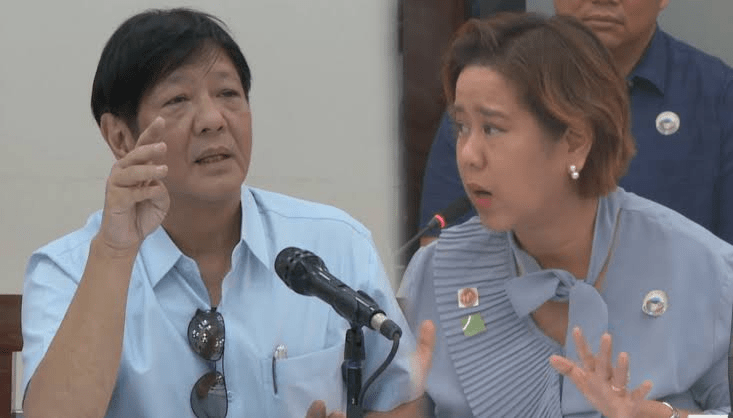
In a political showdown that could rival any blockbuster, President Ferdinand “Bongbong” Marcos Jr. and Rep. Ana York Bondoc (4th Dist.-Pampanga) clashed over the fate of Candaba swamp, lighting up the flood control battleground with a battle of wits and convictions.
As Central Luzon reeled from the aftermath of cyclones and torrential rains, President Marcos convened with local Pampanga officials to strategize flood solutions. Amid the brainstorming emerged a divisive proposal: the construction of a water impounding system in the Candaba swamp. But what was to follow was a riveting verbal duel that left onlookers gripped.
With the determined aura of a seasoned debater, Rep. Bondoc squared off against President Marcos, firing a declarative shot at the Candaba impounding concept. “Hindi po kami papayag sa impounding sa Candaba Swamp. That is a wrong concept and we are not going to allow that,” she declared, her words laced with resolute defiance.
Adding fuel to the fire, she issued a compelling ultimatum, warning of a walkout if farmers’ livelihoods were jeopardized. “If you want a security problem, sirain po ninyo ang hanap buhay ng lahat na magsasaka diyan, magwa walkout po kami dito,” Rep. Bondoc’s retort resonated with determination.
Quick to counter, President Marcos entered the verbal fray with the authority of experience. His counterattack hit hard, branding desilting as an expensive, short-term fix. “I have administered these dredging projects all over the country and they are temporary and exceedingly expensive,” he retorted, as if reliving past confrontations.
Yet, Rep. Bondoc held her ground, advocating for desilting and elevated slope protections, only to face a swift rebuff from President Marcos. He sliced through the proposition, countering that floodwaters originated upstream, not from slopes.
A surprising turn ensued as President Marcos added a touch of humor to the debate, quipping, “Candaba Swamp is already a swamp. Dadagdagan lang ng tubig.” Rep. Bondoc deflected, highlighting the land’s private ownership and the potential repercussions for rice production.
In this clash of ideologies, the battlelines were drawn, pitting the livelihoods of farmers against ambitious flood control proposals. As each retort was fired like a cannonball of conviction, it was evident that this was more than just a policy discourse—it was a showdown of principles, with both sides defending their constituents’ interests.
Whether you’re cheering for the unyielding lawmaker or the seasoned president, one thing is certain: the Candaba swamp saga is far from over. As the debate rages on, the swirling currents of conviction continue to shape the narrative, leaving us captivated by the high-stakes duel over Candaba’s destiny.
 The Daily Netizen