Exploring the landscape of LinkedIn, I’ve come to realize that this unique platform blends career ambitions with networking opportunities, setting it apart from the bustling social media realm dominated by the likes of Facebook, TikTok, and Twitter.
Recently, a colleague’s post on LinkedIn sparked a fascinating discussion on how word choice plays a pivotal role in shaping professional narratives on this platform. This journey has reaffirmed the significance of meticulous wording and strategic expression when sharing pivotal career milestones on LinkedIn.
A Glimpse of Excitement:
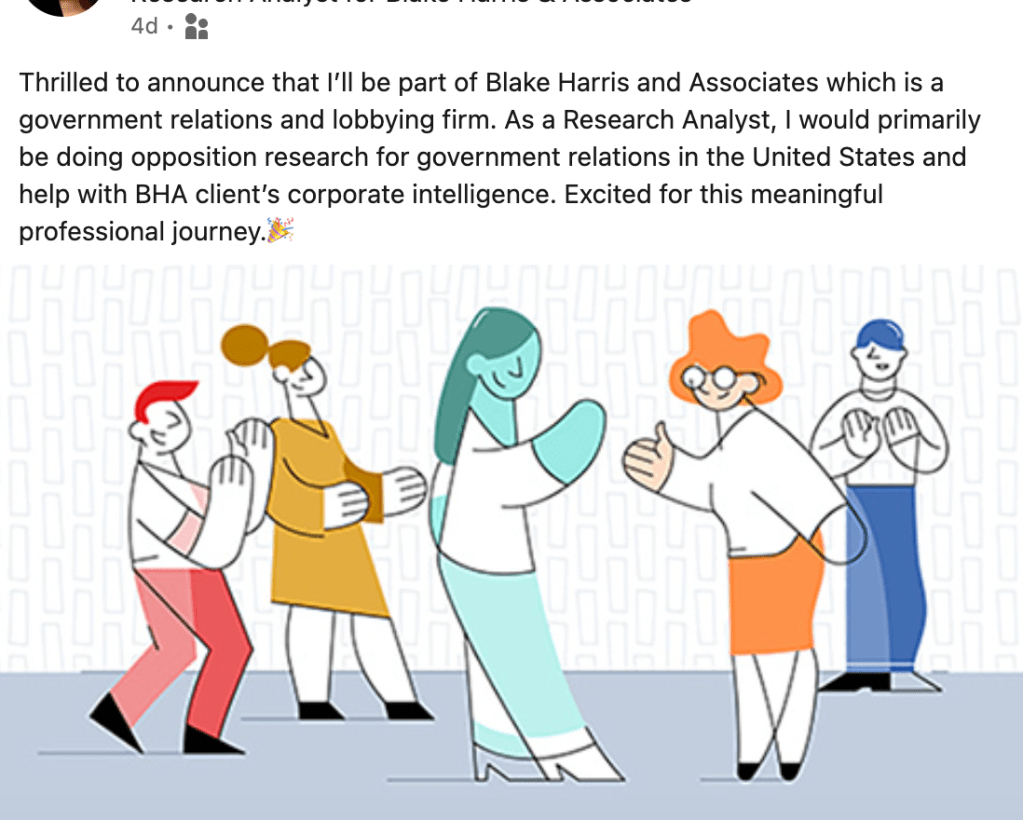
Filled with anticipation and zeal, my colleague posted about her new position at this US-based firm specializing in “government relations and research.”
With pride, she announced her role as a Research Analyst, emphasizing her role in contributing to corporate intelligence. The post resonated with enthusiasm, as she sought to share this crucial juncture of her professional voyage with her connections on LinkedIn.
The Weight of Words
While my colleague’s post appeared innocuous at first glance, it underscored the significant power that words wield. The terms “lobbying firm” and “opposition research,” although factually accurate, can also evoke unintended connotations that might not align favorably with her company’s reputation or her personal brand. The post inadvertently showcased how seemingly innocent choices in language can carry unforeseen implications.
Describing your new employer as a “lobbying firm” that specializes in “opposition research” might seem innocuous at first glance, but it carries significant risks, particularly when the company prefers to operate discreetly. In today’s interconnected world, where information spreads rapidly across various platforms, the terminologies you use can have a far-reaching impact on your professional reputation and the reputation of the company you represent.
Using the term “lobbying firm” on a public platform like LinkedIn can draw unwanted attention and speculation. The term “lobbying” often evokes images of behind-the-scenes dealings, influencing policies, and political maneuvering, which can be interpreted negatively by various stakeholders, including clients, partners, and even regulatory bodies. Companies engaged in lobbying activities often prefer to maintain a low profile due to the sensitive nature of their work. By openly associating your employer with this term, you risk attracting scrutiny and potential backlash, which could ultimately harm your job security and the company’s standing in the industry.
Similarly, highlighting that your company conducts “opposition research” can raise eyebrows, especially in an environment where information warfare and political tensions are prevalent. Opposition research involves gathering information about rival entities, often for strategic advantage. However, this practice can be perceived as ethically questionable, leading to concerns about privacy invasion, manipulation of data, or even engaging in activities that undermine fair competition. By publicly acknowledging this aspect of your company’s work, you might inadvertently alienate potential clients, partners, or even prospective employees who question the ethical implications of such activities. This could not only jeopardize your professional image but also impact the reputation and credibility of the company as a whole, potentially leading to unforeseen consequences, including the risk of losing your job.
Why Words Matter:
- Shaping Perceptions: LinkedIn is a platform that’s all about shaping perceptions. By pinpointing certain terms, my colleague might inadvertently project a politically charged image that could overshadow her diverse skill set and competencies.
- Company Branding: The image of the company one represents should be carefully considered. Emphasizing specific aspects may inadvertently misrepresent the firm’s core values and services.
- Catering to Diverse Audiences: LinkedIn brings together professionals from various walks of life. Crafting content that resonates universally ensures her message reaches a broader and more receptive audience.
- Future Flexibility: Professional paths often evolve. Emphasizing certain aspects of her role now could limit her potential for varied future opportunities.
The Balancing Act: Crafting the Right Message
Taking this valuable lesson to heart, my colleague immediately revised her post. While retaining the excitement, she omitted potentially controversial terms. By emphasizing her broader skill set, industry insights, and the substantial growth potential her new role offered, she struck a delicate balance that underscored her professionalism.
Navigating LinkedIn Etiquette: The Do’s and Don’ts:
- Do Celebrate Milestones: Share promotions, career advancements, and achievements that highlight your growth.
- Do Share Valuable Insights: Engage in discussions about industry trends, offer insights, and contribute enriching content.
- Do Display Community Involvement: Showcase community engagement, volunteer initiatives, or projects that reflect your commitment to positive change.
- Do Create Original Content: Share well-crafted articles, personal viewpoints, and innovative ideas that contribute to professional dialogue.
- Don’t Oversell Yourself: Avoid excessive self-promotion; instead, provide content that resonates with your network.
- Don’t Express Polarizing Views: Steer clear of sharing strong political opinions, offensive material, or conspiracy theories that might alienate your connections.
- Don’t Share Personal Affairs: While authenticity is crucial, LinkedIn primarily focuses on professional representation. Leave out content that doesn’t contribute to your career narrative.
Navigating Delicate Topics: The Lessons Learned
While my colleague’s experience highlighted the importance of crafting LinkedIn posts with care, it also serves as a poignant reminder that certain terms, even if accurate, can be misconstrued. It’s vital to remember that social media can magnify the implications of word choice. This rings especially true when describing your new company as a “lobbying firm” that conducts “opposition research.” Such terms may inadvertently invite controversy and jeopardize your position.
By meticulously choosing our words and focusing on broader professional attributes, we can cultivate an online presence that resonates with a diverse audience. The world of LinkedIn isn’t just about sharing news; it’s a canvas where we can paint a vivid portrait of our professional journey and potential. As we learn from these experiences, we elevate our ability to harness the power of LinkedIn to its fullest, harnessing its potential for meaningful connections and career growth.
 The Daily Netizen