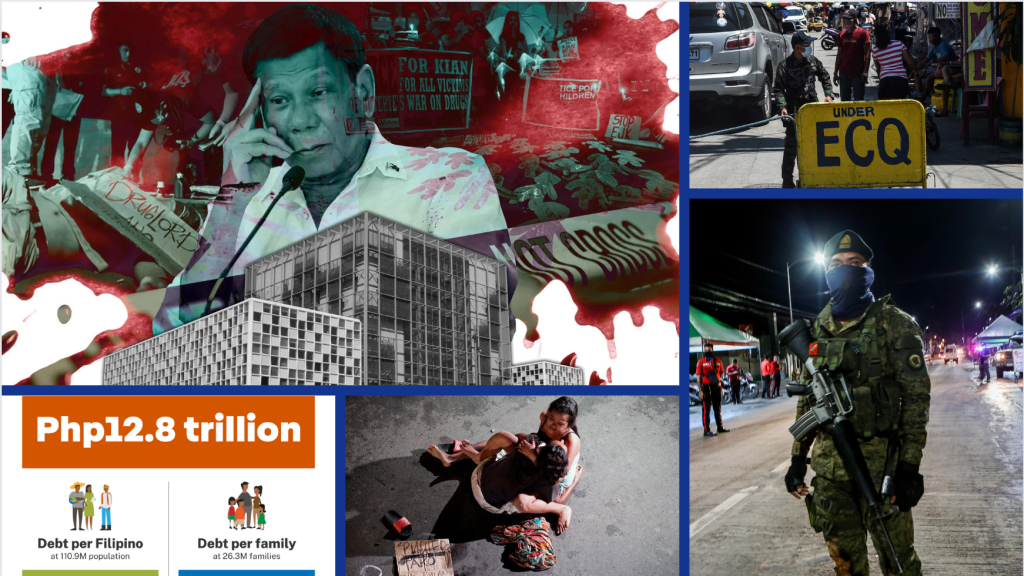
Former President Duterte might have appeared to be against or at least defiant towards the United States and the EU during his presidency, but everything changed when the pandemic struck in the first quarter of 2020. If Duterte had shown subservience to China right after his inauguration in 2016, he ironically transformed into one of the most obedient and loyal leaders throughout the nearly three-year Covid era, enforcing lockdowns and pandemic measures.
Pandemic tyrants in the West, especially in the United States, could consider awarding Duterte a Loyalty Award for being one of the most compliant enforcers of lockdowns and mandatory vaccinations, particularly in Southeast Asia. First, he militarized lockdowns across the entire country and even threatened jail time for those refusing the vaccine.
In this blog, we will discuss and acknowledge the winners and losers during the pandemic in the Philippines, which are outlined below:
The Pandemic Winners:
China: Despite suffering a significant decline in Chinese exports due to the pandemic, China dominated the global Covid industry by exporting highly demanded PPEs, face masks, medicines, and Covid-related products. China also evaded potential global investigations into its role in the origin of Covid and its subsequent handling, despite questions arising following Joe Biden’s contested election in 2020. It’s worth noting that former US President Donald Trump had pledged to investigate the origins of Coronavirus in China and its potential spread worldwide.
The Incompetent Duterte Regime: It has now come to light that the Duterte administration exploited the pandemic to escalate its unconstitutional and draconian war on drugs, impacting children and innocent citizens. The stringent lockdowns under Duterte’s rule led to abuses of power by law enforcement, effectively placing the entire country under de facto Martial Law. Investigations have revealed that individuals in uniform, from high-ranking officials to police enforcers, abused their authority and even framed innocent civilians for personal gain.
Corrupt Politicians: The crisis served as a justification for the Duterte administration to incur excessive borrowing, resulting in trillions of pesos in debt. The previous administration had borrowed billions of dollars from foreign creditors to finance pandemic relief programs and other expenses. By the end of Duterte’s term, the accumulated debt reached a staggering P6.8 trillion, leaving the next administration with nearly P13 trillion to manage. Unfortunately, where public funds are involved in the Philippines, corruption often follows.
Global and Domestic Creditors: According to data from the Department of Finance (DOF), the Asian Development Bank (ADB) emerged as one of the largest lenders to the Duterte regime, providing over $2.6 billion (approximately P130 billion) in 2020. Multilateral lenders supported the Duterte administration’s coronavirus vaccination program primarily through loans. China stood as one of Duterte’s major lenders, while the World Bank contributed $500 million to help mitigate the pandemic’s impact.
TikTok: The Chinese social media platform experienced substantial growth and gained popularity among Filipinos during the pandemic. Globally, TikTok dominated the social media landscape, prompting then President Trump to take action to limit CCP influence on the platform, ultimately seeking its sale in 2020 due to national security concerns.
Western BigTech: The pandemic granted Western BigTech companies, including Facebook, Google, YouTube, and Twitter, significant power akin to de facto dictatorial governmental authority, specifically in terms of censorship and infringement upon free speech. Netizens who dared to discuss Covid’s origins, for instance, were banned and silenced during the initial stages of the pandemic. YouTube, Facebook, and Twitter also banned millions of accounts under the guise of “medical misinformation,” often for merely questioning the vaccines.
BPO Industry: The business process outsourcing (BPO) sector in the country swiftly adapted to the pandemic by enabling millions of employees to work remotely. By the pandemic’s conclusion, numerous BPO companies expanded in size and workforce, significantly contributing to the country’s struggling economy.
Entrepreneurial and Resourceful Filipinos: While countless Filipinos experienced substantial setbacks due to the pandemic, including job losses and business closures, those who adeptly embraced the situation discovered new opportunities. This group encompasses social media influencers who expanded their presence from TikTok to platforms like Facebook and YouTube, beauty entrepreneurs, remote workers (e.g., virtual assistants, social media managers), and online sellers, among others.
The Marcoses: The resurgence of the corrupt Marcos family in politics could be attributed, at least in part, to the pandemic. Despite this, there remain millions, both from older generations and gullible young individuals influenced by misinformation, who cast their votes for Bongbong Marcos and other Marcos family members seeking public office.
The Pandemic Losers:
The Filipino People: The issues mentioned above, such as higher debt, corruption, power abuses, Duterte’s drug war, and other economic challenges, adversely affected the Filipino populace. For a more in-depth analysis, we can discuss the high unemployment rates and the millions of Filipinos who lost jobs and businesses that were unable to recover. The COVID-19 pandemic and the ensuing lockdown measures had a profound impact on the Filipino workforce. As businesses shuttered and economic activity ground to a halt, unemployment rates surged to alarming levels. The closure of establishments across various industries left countless individuals without jobs and income sources. From skilled professionals to daily wage earners, the workforce was hit hard by the sudden economic downturn.
Small Businesses: While many small businesses managed to pivot in response to the pandemic, countless others faced significant setbacks and were unable to bounce back. Many Filipinos, particularly those engaged in small businesses or informal sectors, found themselves struggling to make ends meet. With reduced consumer spending, limited job opportunities, and widespread uncertainty, businesses faced difficulties in surviving the crisis. Despite government aid programs and relief efforts, a significant number of enterprises were unable to weather the storm and had to permanently close their doors.
The still unemployed Filipinos: The impact extended beyond just job losses. Families that relied on the income from these businesses faced financial hardships, struggling to provide for their basic needs, education, and healthcare. The loss of income exacerbated existing inequalities, disproportionately affecting vulnerable communities and individuals who were already on the margins. The inability of many businesses to recover and reestablish themselves post-pandemic had a cascading effect on the overall economic recovery of the country. As these businesses folded, opportunities for employment and entrepreneurship diminished, contributing to a prolonged period of economic stagnation.
OFWs (Overseas Filipino Workers): Paradoxically, OFWs predominantly supported Bongbong Marcos for the presidency, yet they were severely impacted by the pandemic. Many Filipino workers abroad were repatriated, and tragically, some returned to their families in caskets.
 The Daily Netizen