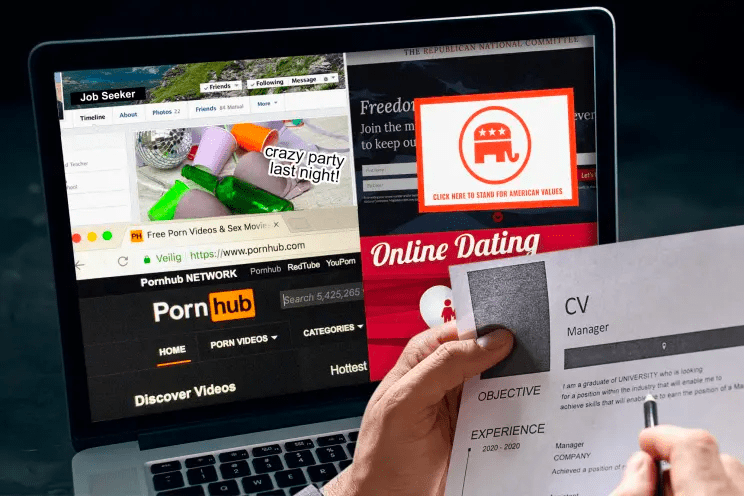
In the age of Facebook, TikTok, and Instagram, social media has become a double-edged sword for job seekers.
While it provides organizations with a powerful hiring tool, recent research suggests that employers should exercise caution when peering into the digital lives of potential hires.
The allure of gleaning insights from candidates’ online profiles often leads recruiters into ethical and legal gray areas, with questionable predictive value for job performance.
A groundbreaking study embarked on a quest to uncover the secrets hidden in the Facebook profiles of 266 U.S. job seekers.
While some information mirrored the typical resume, like educational background and work experience, a significant portion ventured into territories legally off-limits for employers: gender, race, ethnicity, disabilities, pregnancy status, sexual orientation, political views, and religious affiliation.
In addition to this, the study uncovered potential red flags, including profanity, gambling hints, alcohol consumption, and drug references.
The research continued its journey into the realm of recruiters’ minds, involving 39 hiring professionals tasked with evaluating the hireability of 140 candidates based on their Facebook profiles. The outcome was revealing.
Despite focusing on legitimate criteria like education and writing abilities, recruiters fell prey to factors that should theoretically be irrelevant: relationship status, age, gender, and religion. Shockingly, extracurricular activities held no sway over hiring decisions, while undesirable behaviors and sexual content led to lower ratings.
The Elusive Search for Superior Talent
In a bid to find the ultimate hiring treasure, the study enlisted supervisors to rate 81 of the previously evaluated job seekers after six to twelve months of employment. These supervisors were also asked about their employees’ intentions to stay in their roles.
A new set of recruiters was summoned, divided into two groups—one equipped with best practices for evaluating social media and the other without special instructions.
Alas, neither group’s assessments accurately predicted job performance or turnover intentions, dashing hopes that careful scrutiny of online activity could unearth top talent.
In a world where profiles are often public, the participants in these studies willingly granted access to their Facebook pages.
However, a growing number of U.S. states prohibit employers from demanding access to social media during interviews or mandating the sharing of usernames and passwords. European Union regulators have taken an even stricter stance, barring hiring managers from viewing candidates’ social media unless explicit consent is given.
The Future of Social Media Screening
While this research didn’t explore the concept of using social media solely for negative screening—unearthing red flags like racism or misogyny—it raises concerns about the influence of all online content on hiring decisions.
Suggestions include having someone other than the hiring manager perform this task if deemed necessary.
For job seekers, the advice is clear: clean up your social media profiles and tighten those privacy settings. Companies and researchers should explore innovative ways of using social media in the hiring process, like machine-learning applications that can deduce personality traits from online profiles.
In the interim, the study recommends that hiring managers resist the temptation to become digital detectives, as the secrets of superior talent may remain stubbornly elusive behind the digital curtain.
 The Daily Netizen