An Arizona woman’s Tesla experience took an unexpected turn when her vehicle, returned from repairs, no longer allowed her to charge it.
Erine Erickson, an owner of a Tesla Model 3, encountered a frustrating ordeal with the electric carmaker, according to Arizona’s Family channel.
Erickson’s predicament began when her Tesla’s battery died, leading her to take it to a local Tesla service center. Under warranty, Tesla replaced the battery free of charge. However, during this process, Tesla technicians inadvertently disabled the key feature that permits Tesla drivers to supercharge their vehicles quickly, reducing charging times to as little as 15 minutes.
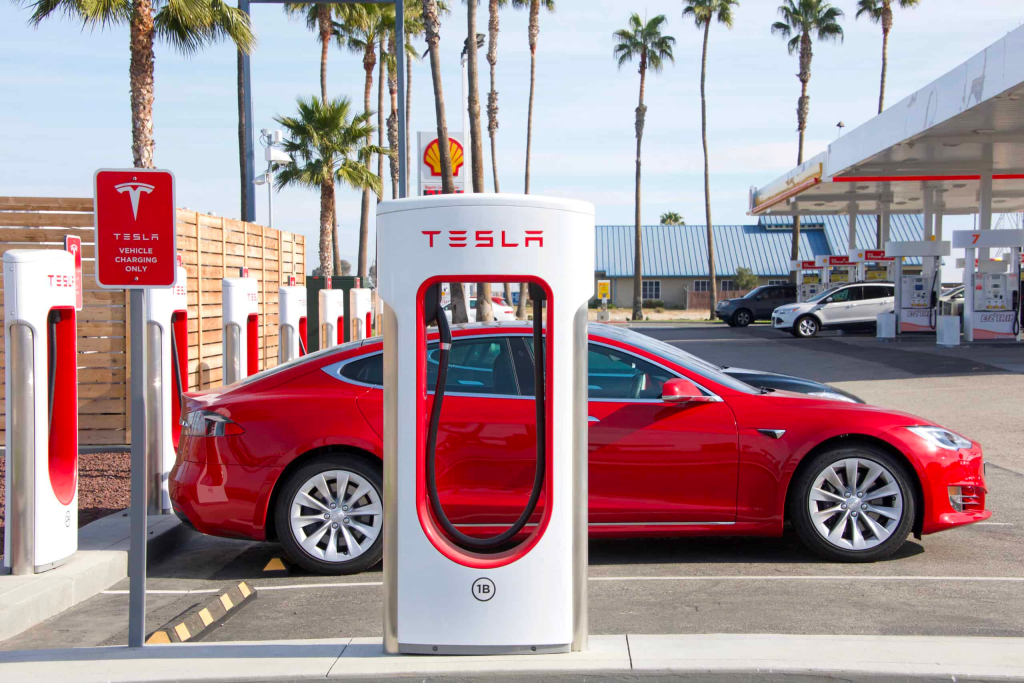
The issue became apparent when Erickson attempted to charge her Tesla at a supercharger station, only to find that her vehicle wouldn’t charge. Stranded at the station, she sought help from fellow drivers but received no solution. “That’s when people saw me and came up to me, and people were trying to troubleshoot it,” she recalled. “But nobody had ever seen anything like it.”
Tesla, upon further investigation, revealed that they had intentionally deactivated Erickson’s supercharger feature due to a listing on Carfax indicating her car had a salvaged title, suggesting it had been totaled in a collision. This action was taken as a safety precaution.
However, it was discovered that Carfax’s information was inaccurate, as an insurance company had provided incorrect details. In reality, Erickson’s car had only sustained minor damage in a fender bender and was never totaled. Frustrated by Tesla’s response, Erickson sought resolution. “I am just hoping for some attention at Tesla and for somebody to look at all of the proof that I provided, from the insurance company, from the collision center, from the DMV, that my car is obviously not totaled,” she pleaded.
Despite providing ample evidence to substantiate her claim, including Carfax correcting her car’s title from salvage to clean, Erickson found Tesla unresponsive. “I wouldn’t characterize it as customer service,” she lamented. “I mean, there’s not a way to email them. There’s a way to communicate on the app, but they don’t respond.”
In search of a solution, Erickson turned to On Your Side, who contacted Tesla on her behalf. Tesla eventually recognized the error and reactivated the supercharging feature, allowing Erickson to charge her car as intended.
While the issue was resolved, Erickson expressed gratitude for On Your Side’s intervention. “I’ve sent over 30 emails, every single day I’ve been dealing with this and rarely getting a response,” she noted. “It was when you all got involved that something finally happened.”
The incident highlights the challenges faced by Tesla owners in obtaining customer support. Notably, Tesla’s CEO, Elon Musk, did away with the company’s PR department, leaving some customers reliant on alternative avenues for assistance.
 The Daily Netizen