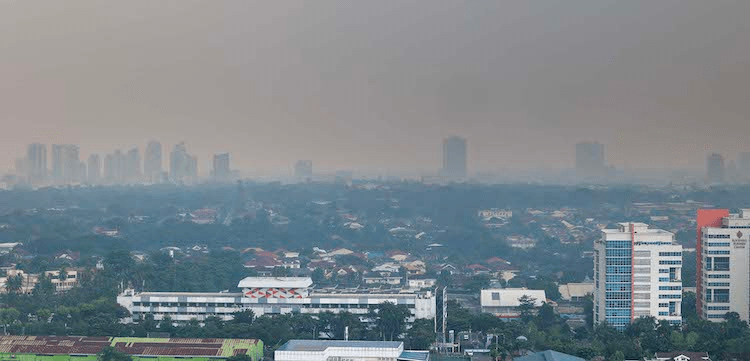
Officials clarified on Friday that the hazy conditions enveloping Metro Manila and its adjacent regions are not the result of volcanic smog, known as vog, originating from the Taal Volcano.
Instead, the haze is attributed to pollutants and temperature fluctuations.
The Department of Science and Technology (DOST) Secretary, Renato Solidum Jr., emphasized that the smog in Metro Manila differs significantly from the vog produced by Taal.
Notably, the Metro Manila smog lacks sulfur dioxide, a key component of volcanic emissions. Nevertheless, Solidum cautioned the public to wear masks and minimize outdoor activities due to potential health risks associated with both phenomena.
“Dapat nating alalahanin na ‘yung nangyayari sa atin dito sa Kamaynilaan ay kakaiba sa Taal Volcano…dito sa Metro Manila ang source ng smoke ay ang pollution galing sa mga sasakyan at ang source po sa Taal ay volcanic gas,” Solidum clarified.
The Philippine Atmospheric, Geophysical and Astronomical Services Administration (PAGASA) explained that the haze shrouding the capital region, Calabarzon, and parts of Central Luzon results from tiny particles originating from smoke or pollutants. These particles become trapped near the surface due to thermal inversion, high humidity, and calm wind conditions.
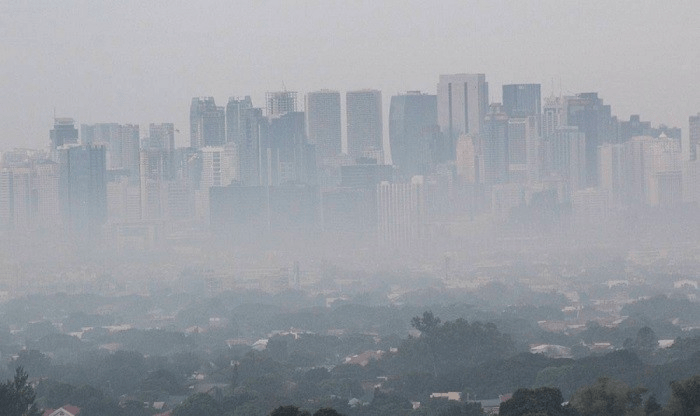
Thermal inversion, an abnormal meteorological phenomenon, occurs when the air near the ground is cooler than the air above it. Solidum stressed that similar situations have occurred before, and rainfall could potentially disperse the smog over Metro Manila, although it might lead to acidic rain in vog-affected areas.
Solidum said, “Titignan natin bukas kung meron pang thermal inversion, kasi susukatin ito ng PAGASA.”
Some local government units (LGUs) in Metro Manila suspended classes, attributing it to Taal’s vog. However, it appears the foggy conditions in Metro Manila may have no connection to the volcanic activities of Taal, despite the announcements made by LGUs. Residents are urged to wear face masks regardless of the cause.
The Philippine Institute of Volcanology and Seismology (Phivolcs) indicated that the vog from Taal, located approximately 90 kilometers south of Metro Manila, is drifting in a west-southwest direction, away from the capital.
So, what’s causing the gloomy skies over Metro Manila? Similar conditions affecting Metro Manila are also observed over Calabarzon and parts of Central Luzon, as reported by the Philippine Atmospheric, Geophysical, and Astronomical Services Administration (PAGASA).
PAGASA did not specify the exact cause of Metro Manila’s conditions, but it appears to be a result of minute particles, potentially from smoke, pollutants, or volcanic aerosols, becoming trapped near the surface due to thermal inversion, high humidity, and calm winds.
Health Precautions:
In light of these conditions, health officials recommend taking the following precautions:
- Wear Masks: To reduce the health risks associated with poor air quality, residents are advised to wear masks when outdoors.
- Limit Outdoor Activities: Minimize outdoor activities, especially for individuals with respiratory conditions, the elderly, pregnant women, and children.
Differences Between Fog, Vog, Haze, and Smog:
- Fog: Fog results from water droplets or moisture in the atmosphere, typically appearing white.
- Vog (Volcanic Smog): Vog is caused by volcanic emissions, specifically sulfur dioxide gas and aerosols, resulting in visible haze.
- Smog: Smog occurs due to the combination of smoke and chemical fumes, often linked to industrial and vehicular pollution. Thermal inversion can exacerbate smog by trapping pollutants.
- Haze: Haze is caused when dust and other air pollutants, usually invisible to the naked eye, interact with sunlight, reducing visibility and giving the sky a grayish hue.
The Department of Natural Resources (DENR) attributes the heightened air quality alert in some parts of Metro Manila to heavy vehicular traffic, especially during rush hours. DENR reports on air quality in various cities, including Makati, Pateros, and Parañaque, indicating levels of unhealthiness.
Phivolcs emphasizes the health risks of vog, particularly for individuals with asthma, lung disease, heart disease, and those in vulnerable groups. The agency continuously monitors volcanic activities and air quality.
Air quality remains variable and can change due to pollution sources and meteorological factors. Officials recommend staying informed and taking necessary precautions to safeguard health.
 The Daily Netizen