
Have you ever stumbled upon Crossover while perusing LinkedIn or actively hunting for remote job opportunities? If so, you’re not alone. The promise of a jaw-dropping $80,000 to $100,000 payout has likely caught your attention. It’s an offer that’s hard to resist, isn’t it?
However, before you eagerly click that “Apply” button, thinking you’re on the verge of securing a fantastic job, you’ll soon find yourself tangled in a web of confusion and uncertainty. You’re not the only one; I too fell down this rabbit hole. Before committing to the sign-up process, I felt compelled to dig deeper and determine if this opportunity was truly worth my time and effort.
And what did I discover? Well, I’m relieved to report that I didn’t divulge my precious personal information to Crossover. But the question remains: Is Crossover a legitimate opportunity, or is it a cleverly disguised scam? While you might be tempted to explore further, I’d like to share my insights and advise you on whether this venture is genuinely worthwhile.
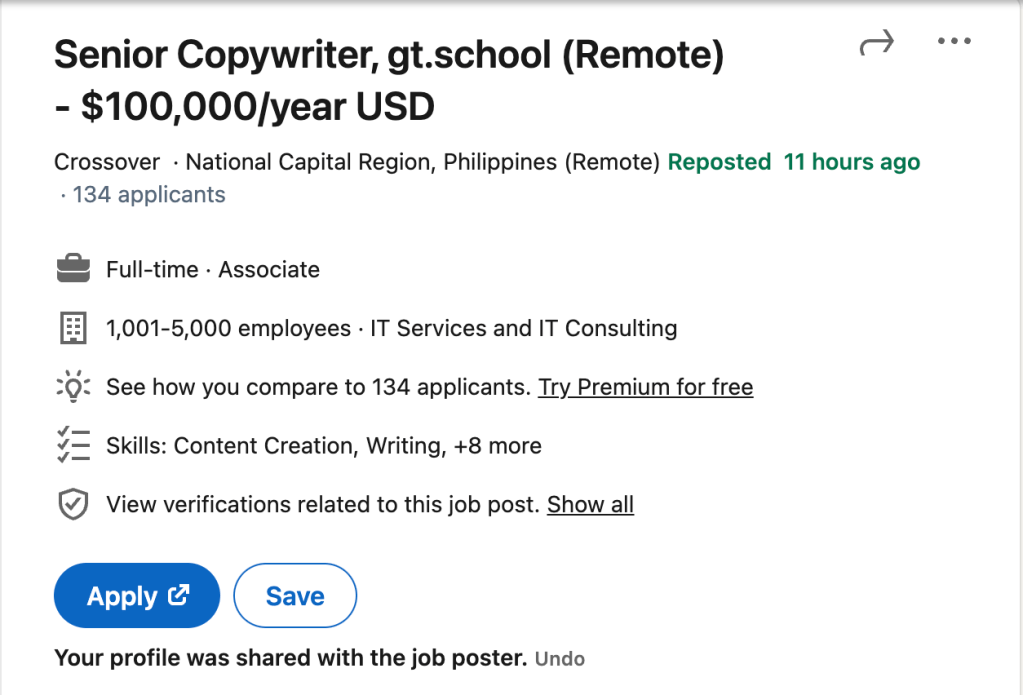
Let’s begin by addressing the elephant in the room – that astonishing $80,000 to $100,000 payout offer. It’s undoubtedly a hook that piques the curiosity of job seekers far and wide. Who wouldn’t be intrigued by the prospect of such a substantial income, especially in the realm of remote work?
So, you’ve clicked on the “Apply” button, fully anticipating a straightforward application process leading to a well-defined job role. But here’s where the plot thickens – instead of a direct route to your dream job, you find yourself embroiled in a labyrinthine sign-up process. The clarity you sought regarding the job on offer remains elusive, shrouded in mystery.
As someone who embarked on this journey, I can empathize with your sense of bewilderment and hesitation. The allure of a six-figure income is tantalizing, but it’s crucial to tread carefully. Like you, I hesitated before divulging my information to Crossover, and I embarked on a quest for answers.
Now, let’s address the burning question: Is Crossover a legitimate opportunity or a cunningly concocted scam? The truth is, the verdict is not crystal clear. While some individuals may have had positive experiences, others have reported red flags and dubious practices. Here’s what you need to consider:
- Lack of Transparency: The ambiguity surrounding Crossover’s job offerings and the convoluted sign-up process raise valid concerns about transparency. It’s essential to know what you’re getting into before committing.
- Mixed Reviews: A quick online search reveals a spectrum of reviews, ranging from glowing endorsements to cautionary tales. It’s prudent to weigh these experiences carefully.
- Due Diligence: Before proceeding, take the time to research Crossover thoroughly. Explore their website, scrutinize reviews, and consult with others who may have crossed paths with this enigmatic organization.
Former Employees and Applicants Expose Crossover for Work’s Controversial Practices
Former workers and job applicants have come forward to expose Crossover for Work, a company that markets itself as a global employer, offering high-paying remote positions. However, their testimonies paint a different picture of the company’s practices and have raised concerns about its impact on job markets, wages, and privacy.
Crossover, also known as Crossover for Work, boasts a 3.3 rating on Glassdoor and maintains an active presence on social media. The company positions itself as a sort of ‘Robin Hoodesque’ employer, connecting high-paying U.S. jobs with talented individuals from around the world. It promises a virtual utopia where employees can work with the ‘Top 1%’ global talent, exercise control over their work location and hours, and engage with cutting-edge technologies.
One former employee, who has since started their own business, shared their experiences, dispelling the notion of Crossover’s promised paradise. They highlighted concerns about Crossover’s hiring process, work conditions, and remuneration practices.
Crossover’s recruitment process, often touted as innovative, includes Hiring Tournaments, which are akin to traditional recruitment practices. Candidates register for these tournaments through platforms like Eventbrite and participate in webinars hosted by Brand Ambassadors who sing Crossover’s praises. However, the promised 24-hour turnaround for feedback on applications often proves inaccurate, leaving candidates in limbo for extended periods.
A lesser-known facet of Crossover’s recruitment process involves the secret grading of resumes by Recruitment Analysts. Candidates can receive a perfect 100 score one week and a dismal 1 the next, with no apparent changes in qualifications or experience. This opaque grading system can profoundly affect a candidate’s prospects.
Once in Crossover’s Marketplace, where candidates are supposed to be one step closer to employment, the reality doesn’t always align with the promises. Despite Crossover’s claims of a vast client base and high demand for roles, only a fraction of candidates make it to interviews, and fewer still secure positions.
Critics argue that Crossover primarily serves its parent company, the Trilogy group, and the ESW Capital group, instead of a diverse range of clients, making it more of an outsourcing company than a global talent provider. This practice, some contend, exacerbates job market issues and undercuts U.S. wages.
Furthermore, employees who enter the Marketplace don’t always enjoy the visibility they expect. Profiles can go unnoticed for extended periods, and if a candidate is passed over for three interviews, they are unlikely ever to secure a job through Crossover.
For those lucky enough to secure interviews, the process can be unpredictable. If the hiring manager shares a language or nationality with the candidate, the final interview may be a formality. However, if not, the process can be grueling, with a high likelihood of rejection.
Employees who eventually join Crossover often find their initial enthusiasm short-lived. While they initially thrive in the dynamic environment, many face challenges when their managers change. The new managers, who may not even speak English fluently, prioritize their own job security and can make the work environment less pleasant.
Crossover’s employment model also raises eyebrows. Employees use their own resources, including computers and internet connections, and only get paid for the hours they work. The lack of benefits like health insurance, paid leave, and retirement plans further complicates the employment equation.
One particularly contentious issue is Crossover’s use of spyware to monitor employees. The software captures webcam images every ten minutes, ostensibly to verify work hours. Privacy concerns arise as Crossover requires employees to use their own computers and internet connections for work.
Despite these revelations, Crossover continues to operate, attracting applicants with promises of high-paying remote positions. These testimonies serve as a cautionary tale for job seekers, highlighting the importance of conducting thorough research before pursuing opportunities with remote work platforms like Crossover for Work.
 The Daily Netizen