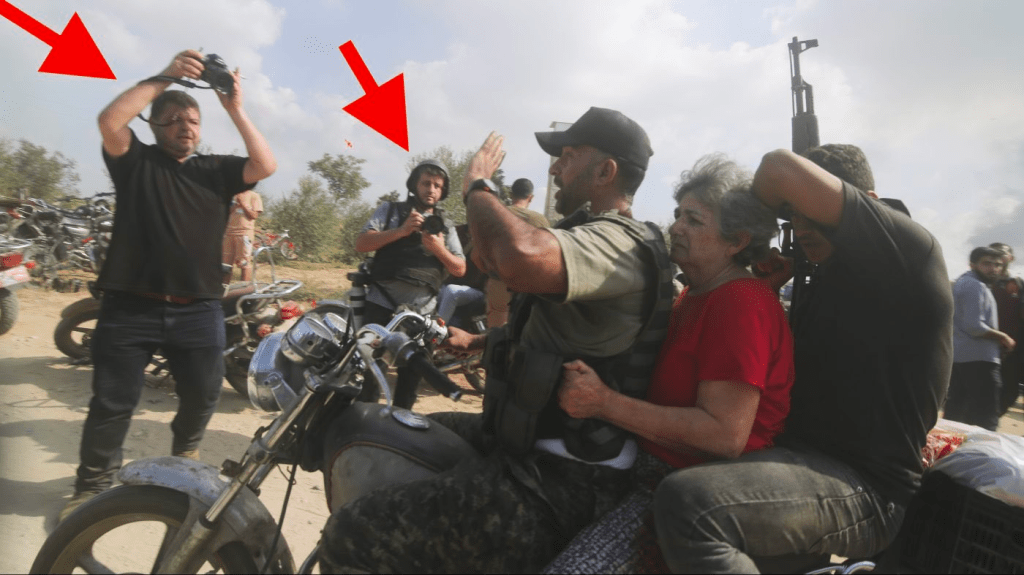
Israeli Prime Minister Benjamin Netanyahu has publicly lambasted mainstream Western media for their associations with photojournalists embedded with Hamas, branding them “accomplices in crimes against humanity.”
This condemnation came after CNN severed ties with a freelance photographer who was photographed receiving a kiss from Hamas leader Yahya Sinwar.
Netanyahu’s office expressed grave concern over the actions of photojournalists associated with international media who covered the events of Oct. 7th when Hamas terrorists carried out brutal acts of murder.
The Israeli leader demanded immediate action by the media outlets involved.
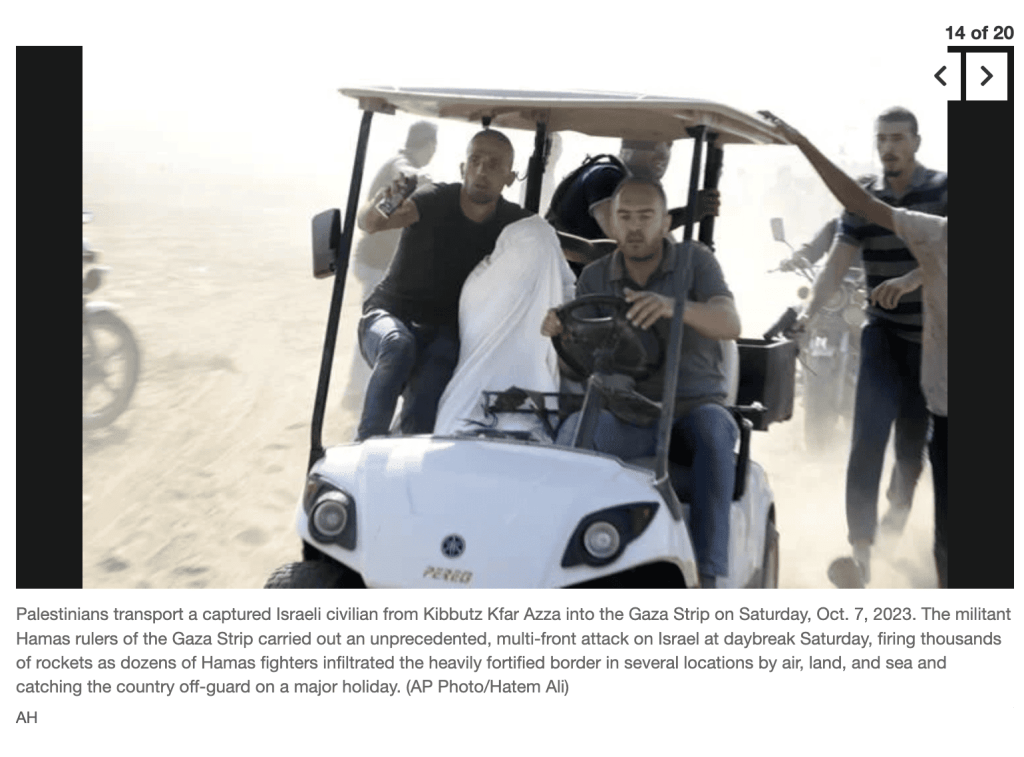
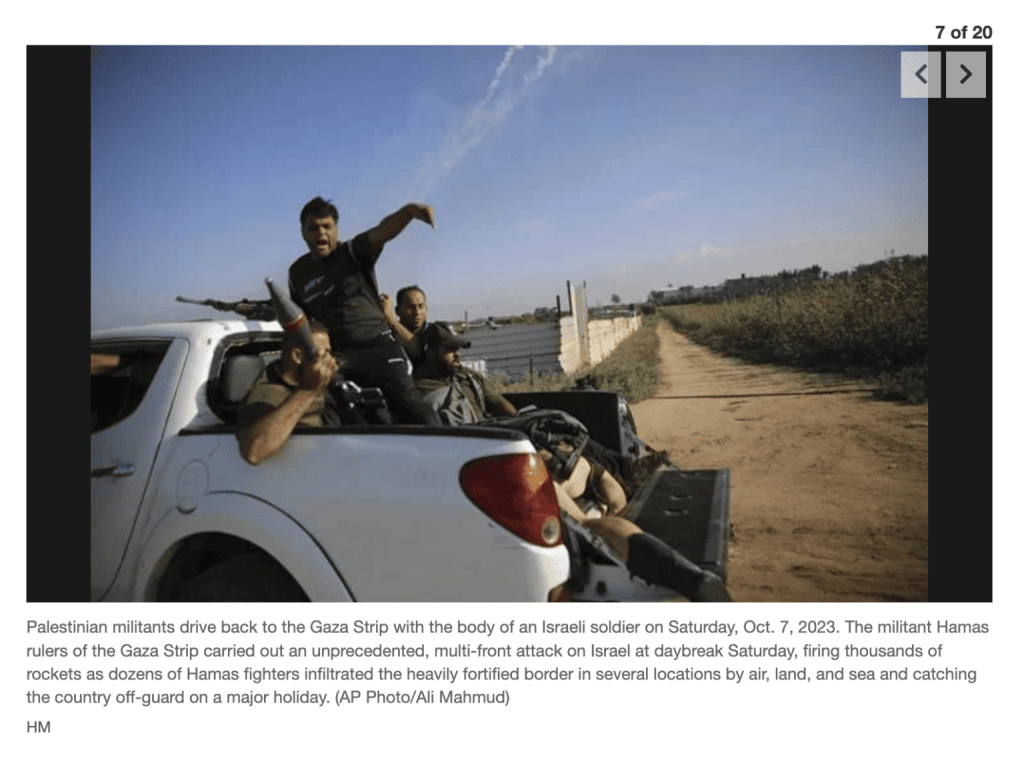
A watchdog group, HonestReporting, published a report revealing that photojournalists and freelancers from prominent news agencies, including Reuters, the Associated Press (AP), CNN, and The New York Times, documented the atrocities committed by Hamas during the October 7th attack.
This included the lynching of an Israeli soldier and the abduction of Israelis to Gaza.
CNN, in response to the report, confirmed that they had suspended ties with one of their freelance photographers. Meanwhile, the AP declined to comment on the matter.
HonestReporting’s report raised concerns about the proximity of certain photojournalists to the terror group, suggesting that their presence during the attack was questionable.
The report stated, “Some of their atrocities were captured by Gaza-based photojournalists working for the Associated Press and Reuters news agencies whose early morning presence at the breached border area raises serious ethical questions.”
The report also raised the possibility that Hamas-embedded photojournalists working for major American networks could either be “infiltrators” or terrorists themselves.

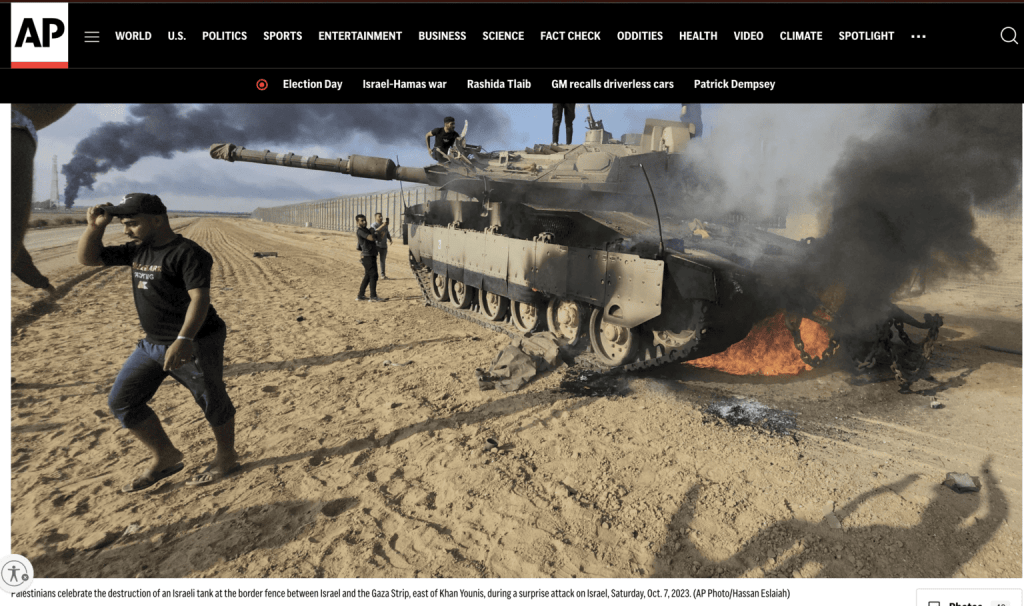
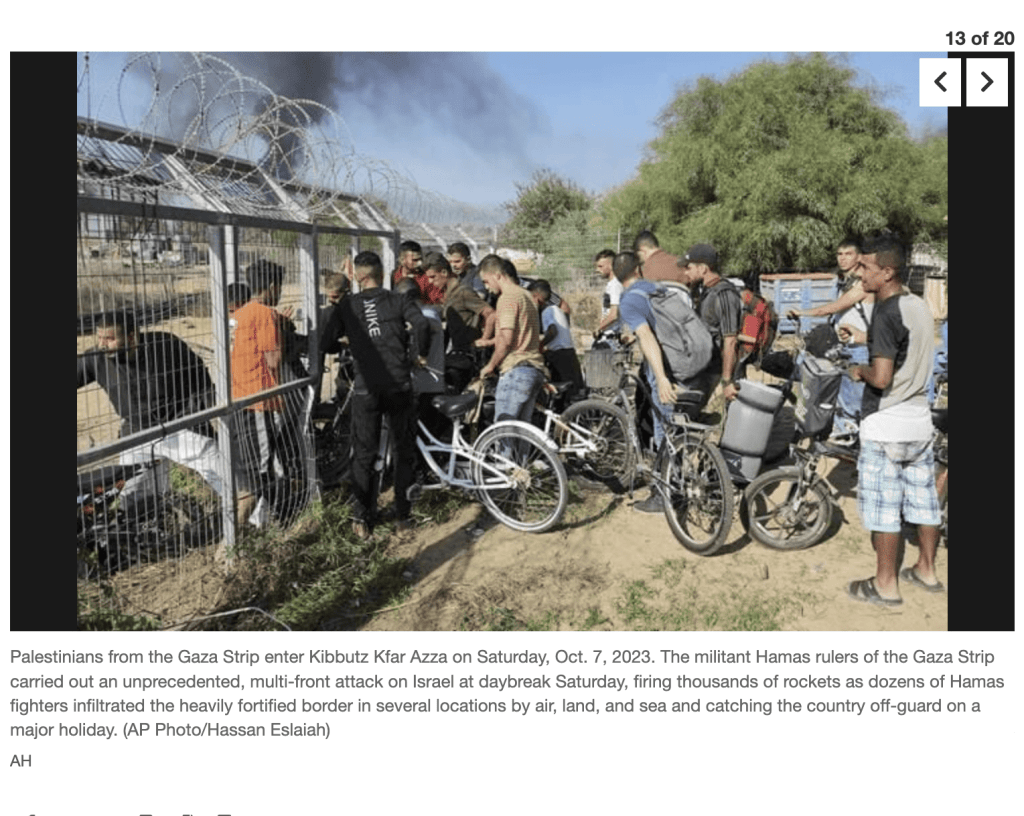
Four photojournalists were named in the AP’s photo credits from the Israel-Gaza border area on October 7: Hassan Eslaiah, Yousef Masoud, Ali Mahmud, and Hatem Ali.
Eslaiah, who also worked for CNN, crossed into Israel, photographed a burning Israeli tank, and captured infiltrators entering Kibbutz Kfar Azza.

He did not wear a press vest or a helmet during these events.
Screenshots of Eslaiah’s now-removed tweets showed him standing in front of the Israeli tank. The Arabic caption of his tweet read: “Live from inside the Gaza Strip settlements.”

Israel’s Minister of Communications, Dr. Shlomo Karhi, issued a stern letter to the outlets named in the investigation—Reuters, the Associated Press, CNN, and The New York Times.
Karhi called on individuals, journalists, institutions, unions, and organizations worldwide to take a stand on the matter.
The allegations of photojournalists being closely associated with Hamas have stirred controversy, with some Israeli officials and watchdog groups condemning their actions.
Benny Gantz, a member of Israel’s war cabinet, asserted that “journalists who knew about the massacre, who remained silent and took pictures” were “no different from the terrorists.”
CNN severed ties with Hassan Eslaiah, the freelance photographer seen receiving a kiss on the cheek from Hamas leader Yahya Sinwar.
CNN stated that, although they had not found any inaccuracies in his work, they decided to suspend all ties with him.
The AP, which occasionally employed Eslaiah as a freelancer, distanced itself from the allegations in a statement, denying prior knowledge of the October 7 attacks.
The AP clarified that they did not have staff at the border during the attacks and that their freelance photos were acquired and verified.
Reuters also denied prior knowledge of the attack, stating that their coverage came from Gaza-based freelance photographers who were at the border on the morning of October 7, without any prior relationship with the news agency.
The New York Times, which had been mentioned in the allegations, rejected the claims as untrue and outrageous. They asserted that their journalists on the ground were put at risk by such accusations and that their reporting was impartial and fair.
The controversy surrounding photojournalists’ associations with Hamas raises ethical and professional questions, highlighting the challenges of reporting in conflict zones and the potential risks of being perceived as aligned with one side of the conflict.



 The Daily Netizen