
Thanksgiving, a holiday traditionally associated with the Pilgrims and Native Americans in 1621, might seem an unlikely celebration in the Philippines.
However, digging into history reveals a fascinating connection between the Southeast Asian nation and the United States.
Philippines’ colonial past unfolds a story that intertwines the feast of Thanksgiving with the influence of American rule. Spain held sway over the Philippines for over three centuries until December 1898 when the Treaty of Paris ceded control of the archipelago to the U.S. for $20 million.
The subsequent American occupation of the Philippines, lasting until 1946 when the nation secured independence, marked an era when Thanksgiving became ingrained in Philippine homes. U.S. Governors-General issued proclamations, designating Thanksgiving as a national holiday, celebrated annually.
One of the earliest Thanksgiving dinners in the Philippines occurred on Nov. 24, 1899, in Pasay City, hosting Company D of the 30th U.S. Volunteers. The observance continued until 1935, coinciding with the establishment of the Philippine Commonwealth under President Manuel L. Quezon. However, World War II disrupted the tradition with the arrival of Imperial Japanese forces.

During the Japanese occupation, a clandestine celebration occurred in May 1943, “in thanksgiving to the great Japanese Empire.” Yet, Filipinos and Americans persisted in secret celebrations. Following the war, Thanksgiving became a public holiday from 1944 to 1965, shifting to Sept. 21 in 1972 under President Ferdinand Marcos’ martial law proclamation.
The tradition persisted but ceased in 1986 after the EDSA Revolution stripped Marcos of power. Despite Thanksgiving no longer being an official holiday, the tradition endures, especially among Filipinos with ties to the U.S.
Some Filipinos put a local spin on Thanksgiving traditions, with Pepper.ph Editor-in-Chief Pamela Cortez sharing her experiences. She highlights the holiday’s underrated status, emphasizing its potential for bringing families together and creating memories around a diverse spread of food.
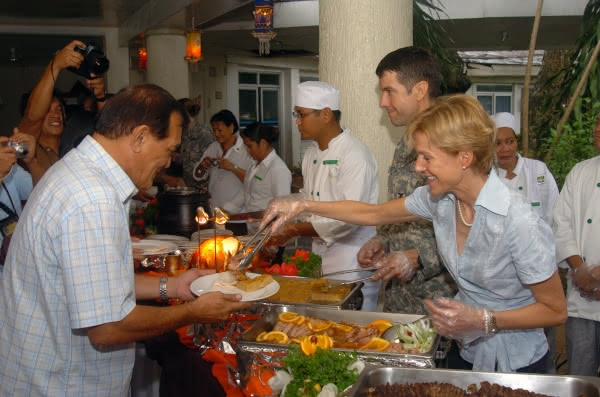
Local recognitions of the holiday have emerged on social media, with various organizations and companies expressing their gratitude. Notable hotels and restaurants, such as The Peninsula Manila, Diamond Hotel, and Wolfgang’s Steakhouse, contribute to the festive atmosphere by offering Thanksgiving buffets.
While Thanksgiving is not officially celebrated in the Philippines today, its rich history persists, with individuals finding personal ways to express gratitude. The U.S. Embassy in the Philippines and affiliated offices continue to observe the holiday, acknowledging its significance.
The journey of Thanksgiving in the Philippines reflects a tale of resilience, adaptation, and cultural fusion.
From its roots in American colonization to its revival during martial law, the holiday has left an indelible mark on the nation’s history.
As Filipinos continue to celebrate Thanksgiving in their unique ways, the tradition lives on, reminding us all to be thankful for the diverse threads that weave our shared history.
 The Daily Netizen