
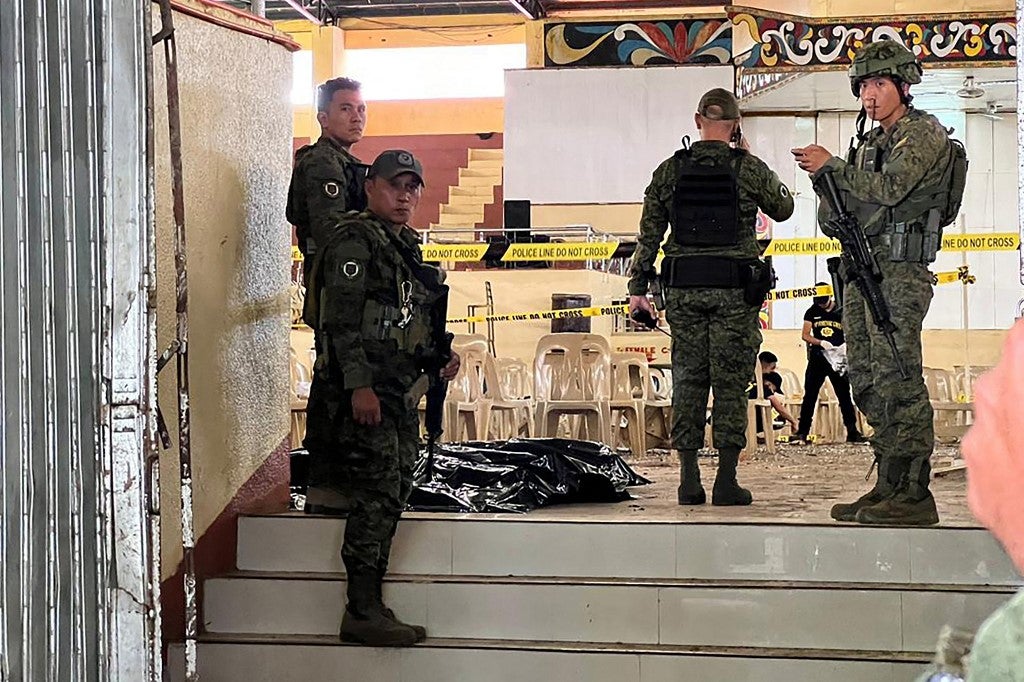
A devastating explosion shook the state-run Mindanao State University (MSU) in Marawi City on Sunday, December 3, during a Mass, leaving at least 11 people dead and 50 others injured.
The incident occurred in the university’s Dimaporo Gym during a special Catholic Mass on the First Sunday of Advent, a day of significant importance for Catholics marking the beginning of the Christmas season.
The MSU bombing unfolded during a Catholic Mass on the First Sunday of Advent, traditionally marking the beginning of Christmas preparations.
This tragic incident seems to confirm a pattern of a surge in Islamic terrorism in the country during the festive month of December.
It also coincides with heightened global tensions as yesterday’s Eiffel Tower incident saw an ISIS terrorist stabbing multiple tourists.
The specter of terrorism looms large as the international community remains on edge following last week’s foiled terror attack on a Christmas event in Germany.
Images and videos shared with a number of local media hinted at a potent explosion, prompting a swift response from Philippine authorities.
President Ferdinand Marcos, Jr. pointed fingers at “foreign terrorists” for the attack, echoing concerns about international connections, Associated Press reported.
“I condemn in the strongest possible terms the senseless and most heinous acts perpetrated by foreign terrorists upon the Mindanao State University,” Marcos Jr. said in a statement.
“Extremists who wield violence against the innocent will always be regarded as enemies to our society.”
Marcos refrained from providing details on why he promptly attributed the high-profile bombing to foreign militants. Defense Secretary Gilberto Teodoro Jr., in a subsequent news conference, vaguely hinted at a potential “foreign element” in the bombing without offering further clarification.
General Romeo Brawner Jr., the military chief of staff, suggested that the bomb attack might be a retaliatory move by Muslim militants responding to recent setbacks in battles.
Exploring various possibilities, Brawner raised the prospect of a retaliatory attack, citing the recent killing of 11 suspected Islamic militants in a military offensive.
This operation, supported by airstrikes and artillery fires, took place near Datu Hoffer town in the southern Maguindanao province.
Regional police director Brigadier General Allan Nobleza identified the slain militants as members of Dawlah Islamiyah, an armed group that has aligned itself with the Islamic State and continues to maintain a presence in Lanao del Sur province.
The connection between these events and the broader context of rising tensions remains a subject of investigation.
The Army’s 6th Infantry Division conducted air and ground assaults on Friday, December 1, in response to validated information about the group’s presence in the area. Major General Alex Rillera, 6th ID commander, revealed that the group aimed to disrupt economic activities in Central and South-Central Mindanao.
Lanao del Sur Governor Mamintal Adiong Jr. labeled the explosion a bomb attack and called for a swift investigation to bring the perpetrators to justice. He stressed the importance of condemning terrorist attacks on educational institutions, promoting a culture of peace.
The deadly incident drew parallels with recent global terrorism, including yesterday’s stabbing incident at the Eiffel Tower, where an ISIS terrorist targeted tourists, and the foiled terror attack on a Christmas event in Germany last week.
In response to the MSU bombing, President Marcos Jr. declared a heightened security alert nationwide, putting state forces on alert in the capital, Manila. The coast guard intensified intelligence gathering and implemented stricter inspections on passenger ferries, deploying bomb-sniffing dogs and sea marshals.



 The Daily Netizen