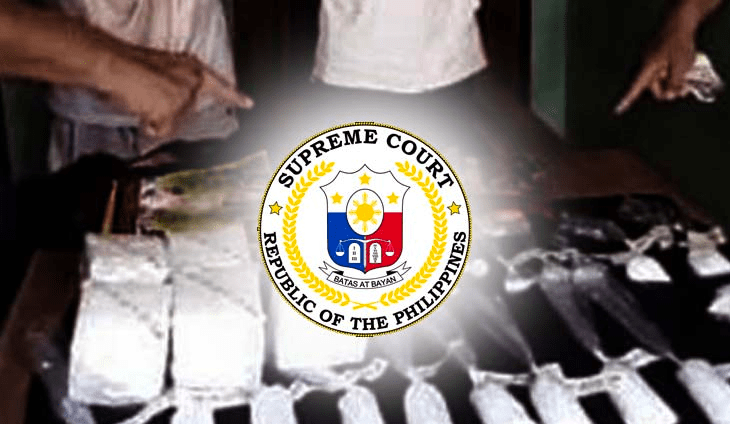
A recent ruling by the Supreme Court underscores the critical importance of adhering to proper procedures in buy-bust operations conducted by law enforcement agencies, particularly in cases involving the sale of prohibited drugs.
In a landmark decision, the Court acquitted an individual accused of drug-related offenses due to the failure of authorities to observe the prescribed protocols during the operation.
Highlighting the significance of procedural compliance, the Court emphasized that while buy-bust operations are legally sanctioned methods for apprehending drug offenders, strict adherence to the established procedures is imperative to safeguard individual rights.
Central to these procedures is the “chain-of-custody rule,” which dictates the meticulous documentation and authorized handling of seized drugs or controlled substances from seizure to presentation in court.
The chain of custody ensures the integrity of confiscated evidence and establishes the identity of the prohibited substance with unwavering precision—a prerequisite for any finding of guilt.
Under Republic Act 9165, law enforcement operatives are mandated to follow specific steps to uphold the integrity of seized items used as evidence.
These include immediate inventory and photographing of confiscated items in the presence of various witnesses, including the accused or their representative, elected public officials, media representatives, and Department of Justice (DOJ) representatives.
The requirement for insulating witnesses aims to prevent the possibility of evidence tampering or planting, thereby ensuring the credibility and reliability of the evidence presented in court. A case example illustrates the critical role of insulating witnesses, as inconsistencies in witness testimonies and timelines led to the acquittal of the accused.
In the case of People versus Cabezudo, the Court emphasized that insulating witnesses should be physically present at the time of inventory, thereby affirming their role in validating the integrity of the operation. These witnesses serve as safeguards against procedural lapses and potential abuses, thereby upholding the principles of justice and due process.
Ultimately, adherence to proper procedures in buy-bust operations not only strengthens the integrity of law enforcement efforts but also upholds the rights of individuals accused of drug-related offenses. By ensuring transparency, accountability, and fairness, law enforcement agencies contribute to the effective administration of justice and the preservation of public trust in the criminal justice system.
Meanwhile, with respect to the viral case of Jayson Dumlao, the Philippine Drug Enforcement Agency (PDEA) follows specific procedures for conducting buy-bust operations, which are aimed at apprehending individuals involved in illegal drug activities.
While the exact procedures may vary slightly depending on the circumstances of each operation, generally, the following steps are involved:
- Surveillance and Intelligence Gathering: PDEA conducts surveillance and gathers intelligence on suspected drug dealers or locations where illegal drug activities are suspected to occur. This phase involves monitoring the activities of suspects, identifying key individuals, and gathering evidence.
- Planning and Coordination: Based on the gathered intelligence, PDEA plans the operation, including the selection of officers involved, determining the location and timing of the operation, and ensuring necessary resources and equipment are available.
- Undercover Operation: PDEA officers, often posing as buyers or customers, make contact with the suspects and arrange a drug transaction. This may involve negotiation of the drug sale, agreeing on a meeting place, and establishing communication channels.
- Execution of the Operation: On the agreed-upon date and time, PDEA officers execute the operation. This typically involves the exchange of money for illegal drugs, with undercover officers closely monitoring the transaction. Once the illegal transaction occurs, PDEA officers move in to apprehend the suspects.
- Arrest and Seizure: Suspects involved in the illegal drug transaction are arrested, and any illegal drugs, paraphernalia, or evidence related to the crime are seized. PDEA officers follow established protocols for handling and documenting evidence to ensure its admissibility in court.
- Documentation and Reporting: Following the operation, PDEA officers document all details of the operation, including the identities of suspects, evidence seized, and any other relevant information. A report is prepared for submission to appropriate authorities for further investigation and legal proceedings.
A buy-bust operation does not necessarily require an arrest warrant. Buy-bust operations are a specific law enforcement tactic used to catch individuals involved in illegal drug trafficking by having an officer pose as a buyer and arranging a transaction with the suspect.
These operations often occur without prior warning or the need for an arrest warrant to apprehend the suspect in the act of committing a crime.
However, law enforcement authorities must still adhere to legal procedures and guidelines to ensure the operation’s legality and protect the rights of the individuals involved.
 The Daily Netizen