

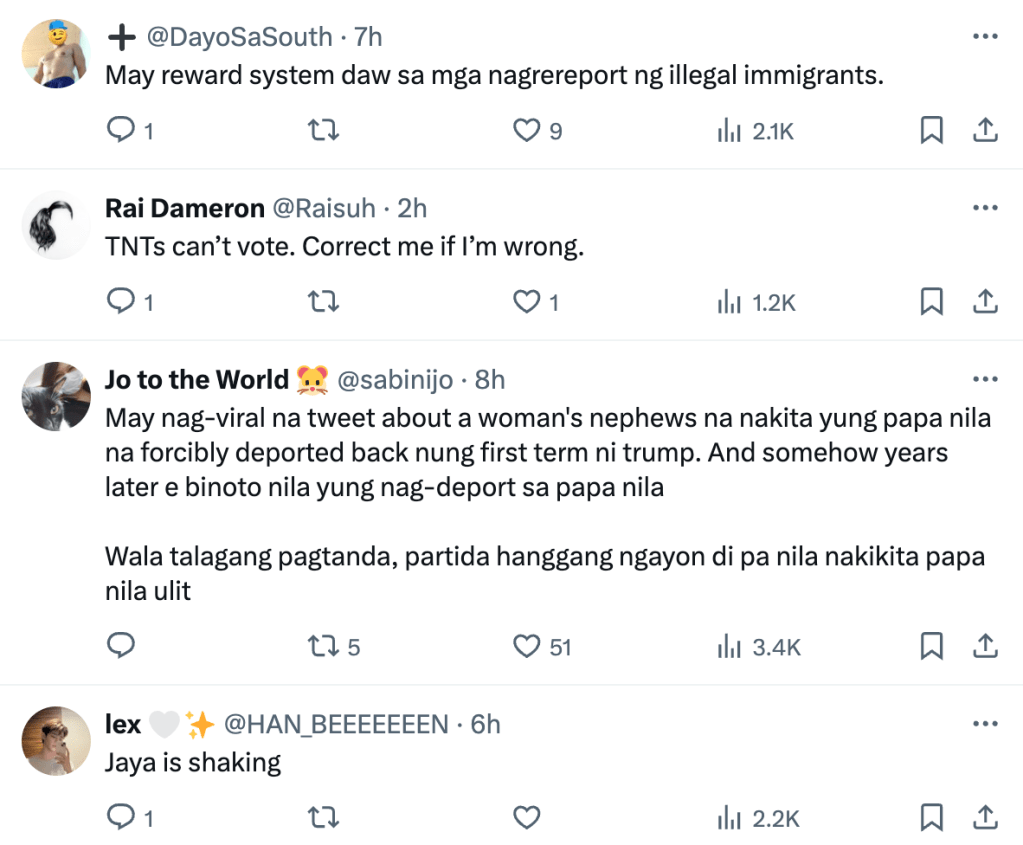


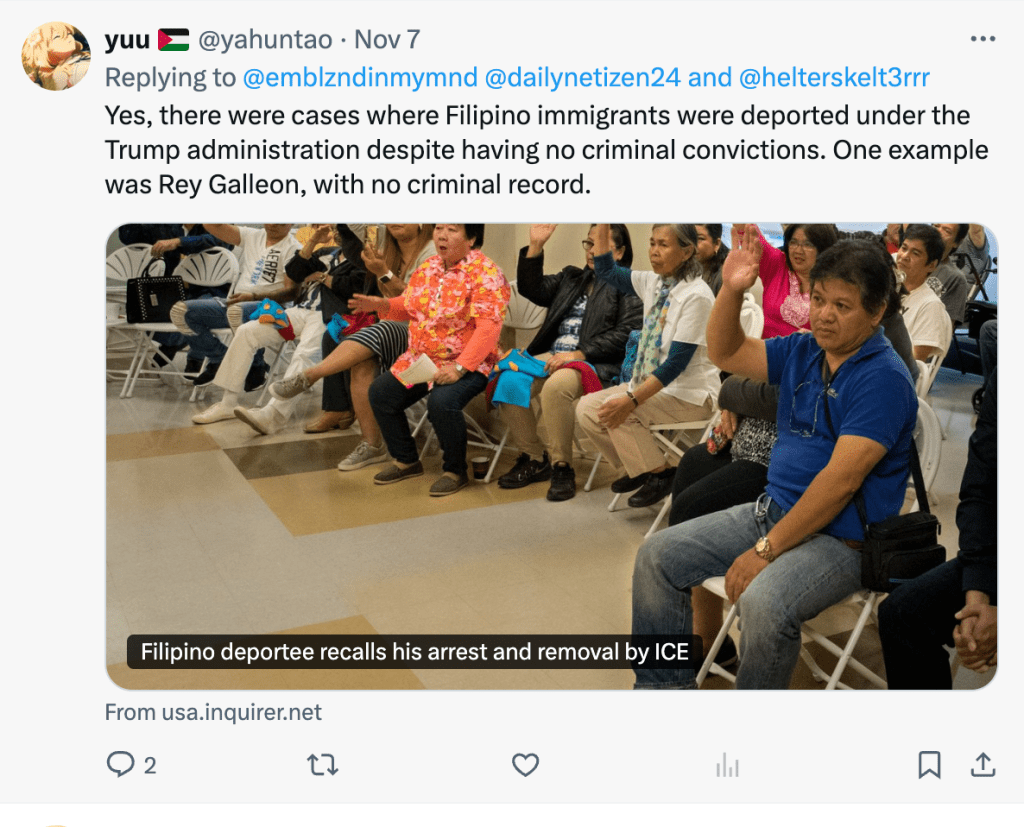


Much like liberals and Democrats in the U.S., some netizens in the Philippines, often identified as “Kakampinks,” have been spreading fake news and liberal-leaning propaganda against President-elect Donald Trump.
They’ve claimed that Trump intends to deport Filipino immigrants, including those who “naively” supported him. This perspective ignores the fact that Trump previously served from 2016 to 2020.
To address this misconception: is there any basis for claims that Trump would deport legal Filipino immigrants from the United States?
It’s important for these critics to understand the distinction between LEGAL immigrants, who are in the country lawfully, and those who are undocumented or illegals. During Trump’s first term, immigration enforcement policies targeted primarily undocumented individuals and those with criminal records, not legal immigrants.
Answer:
No, there is no evidence that the Trump administration or ICE deported legal immigrants without any legal reason.Deportations of legal immigrants during Trump’s term generally involved individuals with past criminal records or violations under immigration law that provided legal grounds for deportation.
Although the administration expanded enforcement to include cases that may have been overlooked by previous administrations, such deportations were still legally justified based on existing immigration laws, even if critics argued these actions were excessively strict.
Can the U.S. legally revoke student visas of foreign nationals at colleges and universities if they engage in radical anti-American or antisemitic behavior, and send them back to their home countries? Is there a legal basis for such a policy?
Yes, under U.S. immigration law, the government can legally revoke student visas of foreign nationals engaged in certain forms of speech or actions, especially if those actions are deemed a threat to national security, incite violence, or support terrorism. Here’s how this works:
- Immigration and Nationality Act (INA): The INA grants the Department of Homeland Security (DHS) authority to revoke visas if a visa holder is involved in activities deemed harmful to U.S. interests. This includes individuals who support terrorism or activities that threaten national security. If a student’s anti-American or antisemitic activities are seen as inciting violence or aligning with terrorist organizations, this could serve as a legal basis for revocation.
- Conduct and Free Speech: While foreign nationals in the U.S. have certain free speech rights, these rights do not extend as far as they do for citizens. DHS can revoke a visa if non-citizens engage in speech or actions that can be classified as “unlawful activities” or as a threat to public safety.
- Specific Threat Criteria: To revoke a student visa on these grounds, authorities would need clear evidence that the student’s activities align with or incite specific threats against public safety or national security. Simply holding or expressing views that are critical of the U.S. or Israel would not typically meet this threshold unless they veered into incitement or affiliation with terrorist groups
In the United States, deportation of undocumented (or “illegal”) immigrants is governed by the Immigration and Nationality Act (INA) and related immigration regulations.
Here are the main legal grounds for deportation:
Document Fraud or Misrepresentation: If an immigrant uses fraudulent documents, lies on immigration forms, or provides false information, they may be deported under INA § 237(a)(3)(C) for document fraud or misrepresentation.
Unlawful Presence: Individuals who enter the U.S. without authorization, overstay a visa, or violate the terms of their entry are subject to deportation under INA § 237(a)(1)(B) and § 237(a)(1)(C). Unlawful presence alone is grounds for removal, as it constitutes being in the country without a lawful basis.
Criminal Offenses: Non-citizens, including undocumented immigrants, may be deported if they commit certain crimes, such as:
Violation of Immigration Status: Non-citizens who violate the terms of their visa or other legal status may also be deported. For instance, students working without authorization or tourists overstaying can be removed for violating status terms under INA § 237(a)(1)(C).
Public Charge: While less commonly enforced, INA § 237(a)(5) allows for deportation if a non-citizen becomes a public charge within five years of entry due to causes not arising after entry (i.e., reliance on public benefits in a way prohibited by law).
Security-Related Grounds: Foreign nationals involved in terrorism, espionage, or other activities that threaten U.S. security are deportable under INA § 237(a)(4). This includes individuals who support or incite terrorism or are members of certain foreign organizations.
 The Daily Netizen