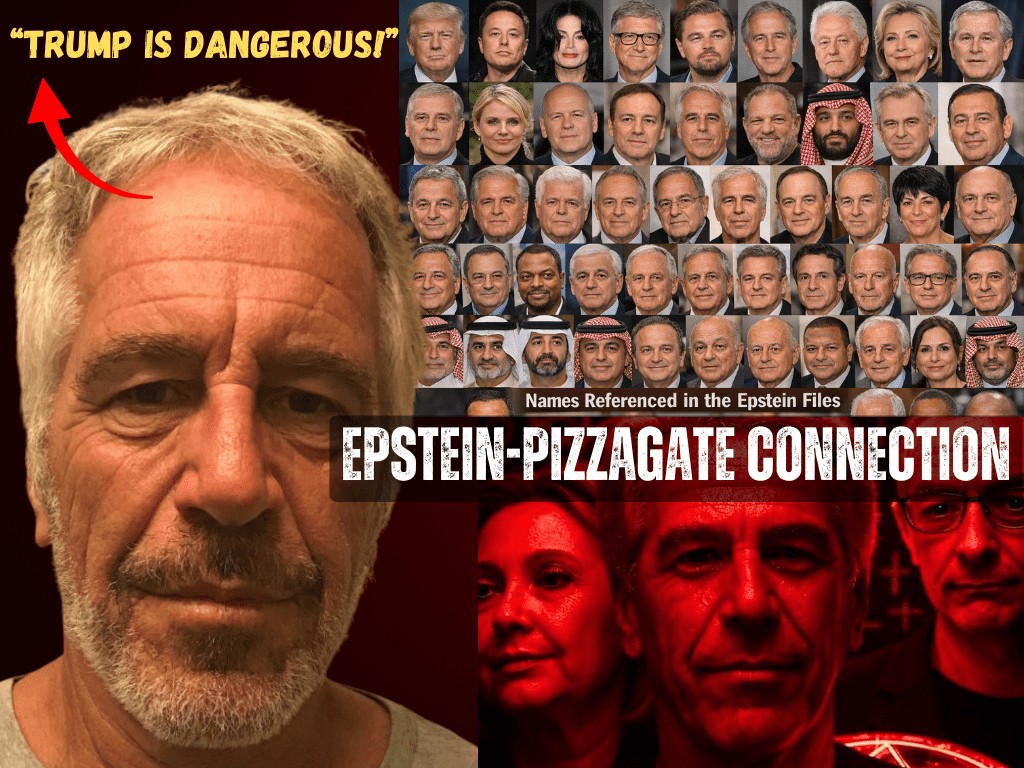
As the Epstein Files resurface and spread globally, a central question dominates political debate: Who covered up the Epstein and Pizzagate scandals, and who worked to expose them?
In recent weeks, renewed attempts have been made to link President Donald Trump to Jeffrey Epstein. However, critics argue that the deeper story is not about association, but about suppression, narrative control, and what they describe as a coordinated effort by Democratic power brokers and allied media institutions to shield themselves while redirecting blame.
The Early Suppression
The first major indication of a media cover-up emerged in 2019, when leaked footage showed ABC correspondent Amy Robach stating that her network had possessed damaging information about Jeffrey Epstein years earlier but chose not to air it. In the recording, she expressed frustration that her reporting was effectively killed despite having sources and corroboration.
For critics, this moment confirmed long-held suspicions that influential media organizations had protected Epstein before his arrest reignited public outrage. The question became not whether Epstein committed crimes, but why certain institutions hesitated to expose them sooner.
The Podesta Emails and Pizzagate
The story traces back further to October 7, 2016, when WikiLeaks released emails belonging to John Podesta, chairman of Hillary Clinton’s presidential campaign. Those emails triggered what became known as Pizzagate, a controversy alleging coded references to illicit activities involving political elites.
Although mainstream outlets dismissed the claims as conspiracy theories, supporters argue that the later exposure of Epstein’s trafficking network forced a reassessment. They contend that Epstein’s documented connections to powerful figures made earlier concerns appear less far-fetched than initially portrayed.
The latest document releases add another layer. According to the files, Epstein circulated links to the Podesta WikiLeaks materials to associates, including his accountant Richard Kahn, who was later named as a co-executor of his estate. Critics argue that this demonstrates overlap between the Podesta email controversy and Epstein’s private communications.
Allegations of Political Collusion
The most explosive claim emerging from the renewed file releases is that certain Democratic figures not only suppressed damaging information about Epstein but later attempted to weaponize the scandal against Trump.
According to the documents cited by critics, Epstein communicated with political figures and allegedly provided strategic guidance during congressional proceedings targeting Trump in 2019. One such example involves Representative Stacey Plaskett of the U.S. Virgin Islands, whose district includes territory near Epstein’s private island. The files reportedly show Epstein offering real-time advice via text message on how to politically challenge Trump during hearings.
For Trump’s supporters, this is not coincidence but collusion. They argue that Epstein, who had referred to Trump as “dangerous,” aligned himself with Democratic operatives in an effort to frame or politically damage the president. Rather than distancing themselves from Epstein, critics claim, some political actors engaged with him while simultaneously shaping public narratives.
The Biden Years and the Question of Disclosure
Another focal point is timing. Critics point out that during President Joe Biden’s four years in office, no sweeping public release of Epstein files occurred. They argue that if definitive evidence tying Trump to criminal wrongdoing had existed, it would have been disclosed during that period.
Instead, large-scale releases intensified only after Trump returned to office. Democrats then publicly called for transparency, a move critics describe as strategic positioning. According to this view, the intent was to create public suspicion around Trump, only for the documents to instead highlight communications between Epstein and individuals aligned with Democratic circles.
Trump’s Recorded Actions
Supporters also emphasize documented actions taken by Trump long before Epstein’s final arrest. Reports indicate that Trump banned Epstein from Mar-a-Lago in 2004, reported him to authorities in 2005, and later cooperated with an attorney representing Epstein’s victims in 2009. These details were eventually acknowledged in mainstream coverage after initial resistance.
Further claims, attributed to House Speaker Mike Johnson, suggest that Trump may have served as an FBI asset or informant in matters related to Epstein. If accurate, that assertion reframes Trump not as a protected associate, but as a cooperating source.
Who Controlled the Narrative?
Throughout the Epstein and Pizzagate saga, critics argue that media institutions and political elites worked in tandem to label dissenting voices as conspiracy theorists. High-profile commentators dismissed the controversies outright, framing those who pursued the stories as extremists rather than investigators.
Now, with millions of pages circulating and renewed scrutiny underway, the debate has shifted. The central issue is no longer whether Epstein’s network existed. It is about who shielded it, who manipulated public perception, and whether the scandal was later repurposed as a political weapon.
For critics of the Democratic establishment, the conclusion is clear. They believe that Epstein and Pizzagate were suppressed when exposure threatened elite interests, and revived only when an opportunity emerged to target Trump. The unfolding document releases, they argue, reveal not just criminal misconduct but a broader system of political collusion and narrative control.
 The Daily Netizen