Remember the blockbuster and award-winning South Korean thriller “Parasite”? This suspenseful masterpiece from 2019 garnered critical acclaim for its exposé of social inequity, greed, and the dark underbelly of the affluent.
One of the most-hyped film critics, Roger Ebert, described it as a “marvelously entertaining film” while acknowledging the intricate layers beneath, stating, “There’s so much going on underneath about how the rich use the poor to survive in ways that I can’t completely spoil here.”
Ebert’s sentiments echoed those of many Hollywood critics, who recognized the film’s profound commentary on the symbiotic relationship between the wealthy and the impoverished. These critics acknowledged that the wealthy rely on the labor of the less fortunate, be it through employing housekeepers, tutors, and drivers or even darker means.
One can see this consensus reflected on review aggregator Rotten Tomatoes, where “Parasite” boasts a remarkable 99% approval rating based on 474 reviews, with an average score of 9.4/10.
Nevertheless, amidst the overwhelming praise, a Twitter user named SlumRNA_GoyimExploder (@SlumRNA_Dog) and others with similar perspectives offered a counter-narrative.
They challenged the perceived wisdom of the Hollywood film review ‘elite’ and exposed what they believed to be naivety and ideological bias.
SlumRNA_GoyimExploder recently tweeted, “Everyone thought this movie was about class consciousness or exploitation of the working class when it was real about how poor people are shitty and completely responsible for their own misfortune.” In retrospect, I can relate to my initial disagreements with prevailing film reviews, even if I struggled to articulate my reservations at the time.
The critics and movie reviewers had unanimously proclaimed that “Parasite” exposed structural inequities and satirized social classes. However, according to SlumRNA_GoyimExploder’s astute observation, they missed the mark.
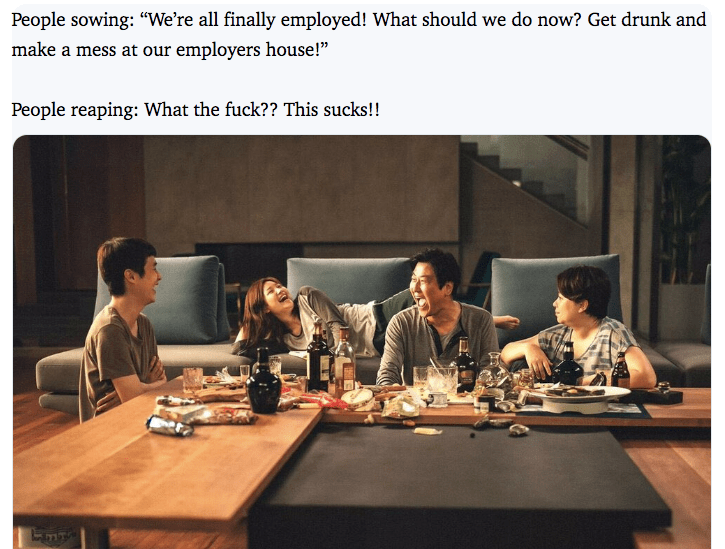
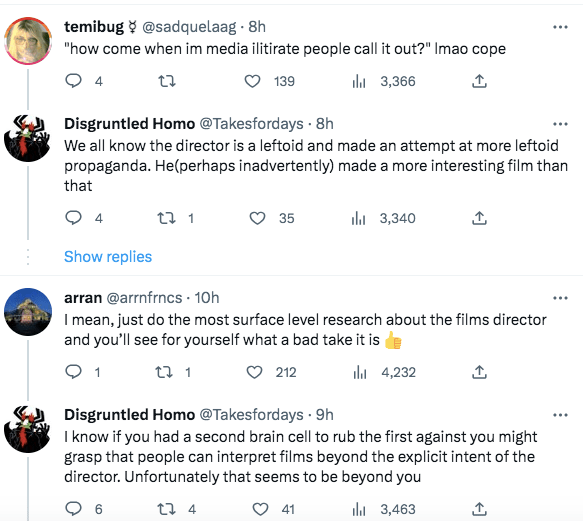
In his tweet, he criticized those he dubbed “Leftoids” for clinging to a superficial interpretation of the film, pretending to possess media literacy. He eloquently pointed out the hypocrisy by stating, “Hundreds of quote tweets and replies talking about media literacy but not one single answer as to why it was a permissible idea for the Kim family to get drunk in their employers’ house, which set off a chain of events that led to half of them dying or living in hiding.”
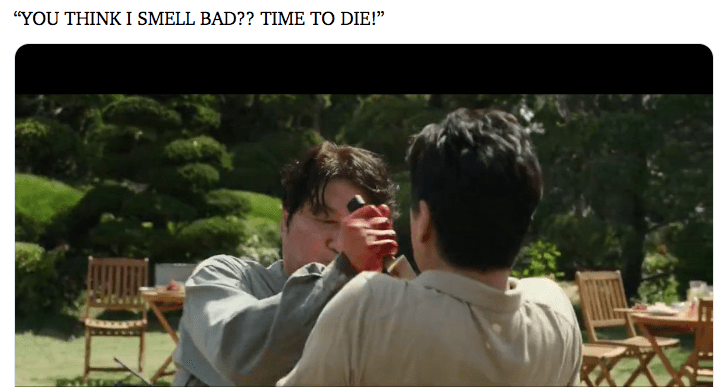
This sentiment resonates with me, as I agree that the film offers a much deeper exploration than what some perceive as a Marxist analysis fixated on class struggle. Rather, it delves into the consequences of personal choices and the repercussions they have on individuals and their families. For instance, the scene mentioned by SlumRNA_GoyimExploder highlights the moral ambiguity surrounding the Kim family’s decision to indulge in alcohol while in their employers’ home, ultimately triggering a calamitous chain of events.
Now try to reconsider the following:

 The Daily Netizen