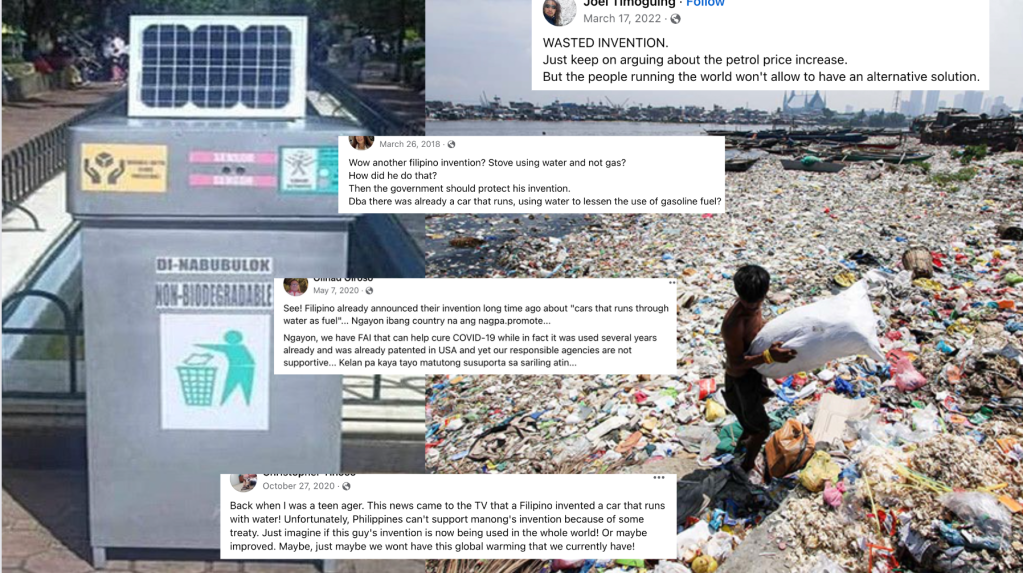
Why do most Filipinos consistently anticipate and call for government assistance whenever they learn about new ideas and inventions by their fellow countrymen?
Many believe that their government is the ultimate solution to nearly everything, encompassing economic problems and potential discoveries requiring “public” support.
The answer can be twofold: Pinoy pride and a ‘Palamunin’ mentality.
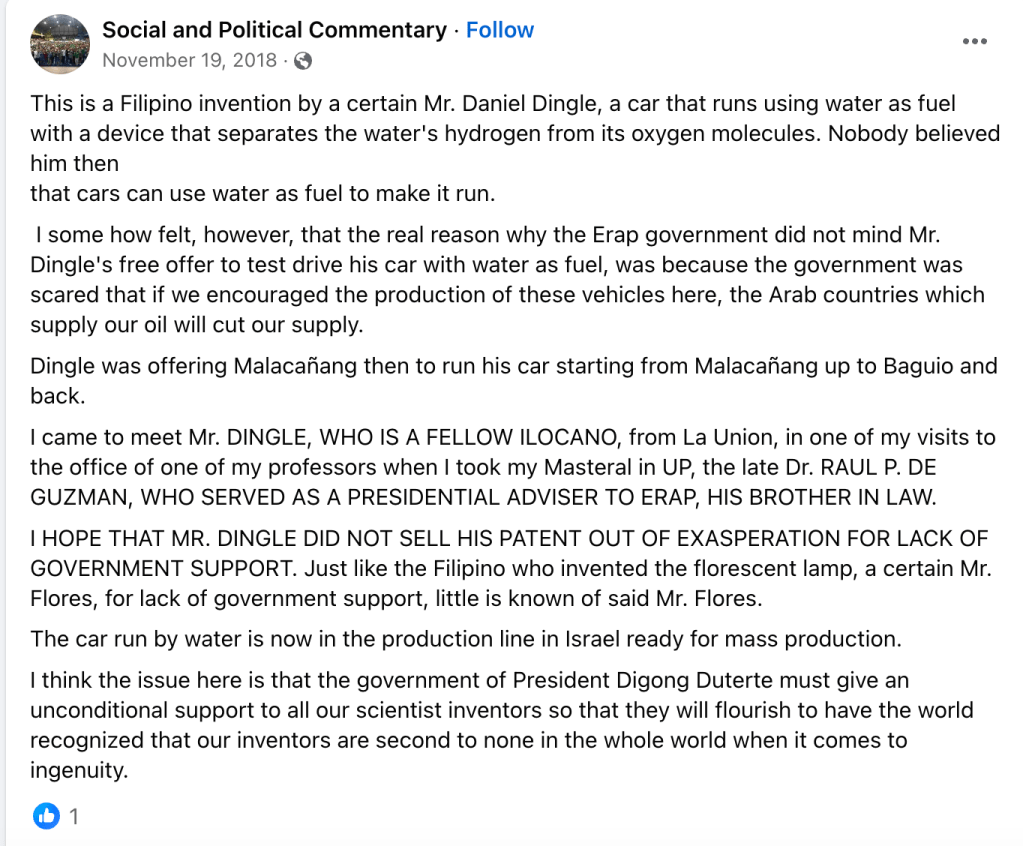
You’ve likely encountered the narrative of a purported groundbreaking Filipino invention — a car that uses water as fuel. To this day, many Filipinos still believe in its authenticity, attributing its failure to materialize to a lack of government support and financial backing.
Some also harbor the misguided belief that the inventor, Daniel Dingel, sold his patent, which has been debunked as a preposterous claim. Subsequently, it was revealed that this invention was a fraud, confirmed as a hoax by the Department of Science and Technology (DOST).
The Dingel case is one of the reasons why Filipinos should immediately refrain from urging the government to financially back “Filipino” discoveries and inventions.
Financial support and the misappropriation of taxpayer money are distinct from moral support. While moral encouragement is essential, it is inappropriate to allocate public funds for so-called inventions that require extensive tests, confirmation, and logistical support.
Consider the case of three computer engineering students from the University of the Cordilleras in Baguio City — Kyle Russell Lucero, Aryk John Mosquete, and Samuel Sta Cruz — who are seeking financial aid to complete their local invention. Their “Smart Garbage Bin,” showcased at the Rose Garden in Burnham Park, aims to revolutionize waste disposal in the city.
This innovative project not only emphasizes the necessity for alternative funding sources but also underscores the potential of private sector involvement in nurturing homegrown innovations, PhilStar reported.


Lucero, the spokesperson for the trio, elucidated the intricacies of their invention. The Smart Garbage Bin features built-in sensors that automatically open its lid when someone approaches to dispose of trash. Crucially, the lid remains open until the person steps away, ensuring convenient and touch-free waste disposal.
Adding a layer of sophistication, the bin can transmit signals to a central command located in the smart command center at the Baguio Convention and Cultural Center. Lucero emphasized that this technology facilitates real-time monitoring, enabling the prompt detection of full bins and timely garbage collection.
Despite the ingenuity of their invention, the students have appealed to the government of Baguio, the DOST, the University of the Cordilleras (UC), and other agencies for financial assistance.
Their plea centers on obtaining logistical support to enhance their invention further, adding more features to the Smart Garbage Bin. Their objective is to contribute to addressing the growing garbage problem in the city while concurrently boosting tourism and preserving the environment.
While seeking government aid remains a conventional route for inventors, the case of these computer engineering students prompts a reconsideration of this approach.
Instead of solely relying on public funds, the trio could explore engaging interested investors and private sector entities. The robust private sector can offer not only financial support but also expertise in scaling up innovations, market access, and valuable mentorship.



Here are the reasons why Filipinos should abandon this “government should help” mentality:
- Government Assistance: A Double-Edged Sword: The appeal for government help in funding inventions may seem like a viable option, but it comes with inherent risks. This reliance can potentially transform into a form of corruption and misuse of public funds, diverting resources from their intended purpose and undermining the principles of transparency.
- Private Sector and Investors as Discerning Judges: Contrary to seeking government aid, Filipino inventors should consider presenting their ideas to the private sector and investors. These entities are better equipped to assess the viability of inventions, conducting thorough evaluations to determine whether an innovation is genuine and can provide practical solutions to real-world problems.
- The Pitfalls of Cronyism and Favoritism: Relying on government assistance for inventions opens the door to cronyism and favoritism. Certain projects may receive preferential treatment, hindering fair competition and equitable distribution of resources within the innovation landscape.
- Mitigating the Risk of Government Expropriation: A significant concern associated with government funding is the potential for subsequent expropriation of inventions. In the long run, this could prove detrimental to inventors and owners, as government control and regulation may impede further development and commercialization.
- Cultivating Independence, Not Dependency: The prevailing mentality among Filipinos, expecting continuous financial support from the government, perpetuates a culture of dependency. Shifting towards seeking private sector investment encourages self-reliance and independence, fostering a more sustainable and dynamic innovation ecosystem.
It is imperative for Filipino inventors to recognize the drawbacks of relying solely on government assistance for their innovations. Emphasis should be placed on creating legal and economic infrastructures that facilitate innovation. While the government plays a crucial role in ensuring a supportive environment, inventors should explore private sector partnerships, ensuring a more sustainable and diverse funding landscape that contributes to the advancement of Filipino inventions on a global scale.
 The Daily Netizen